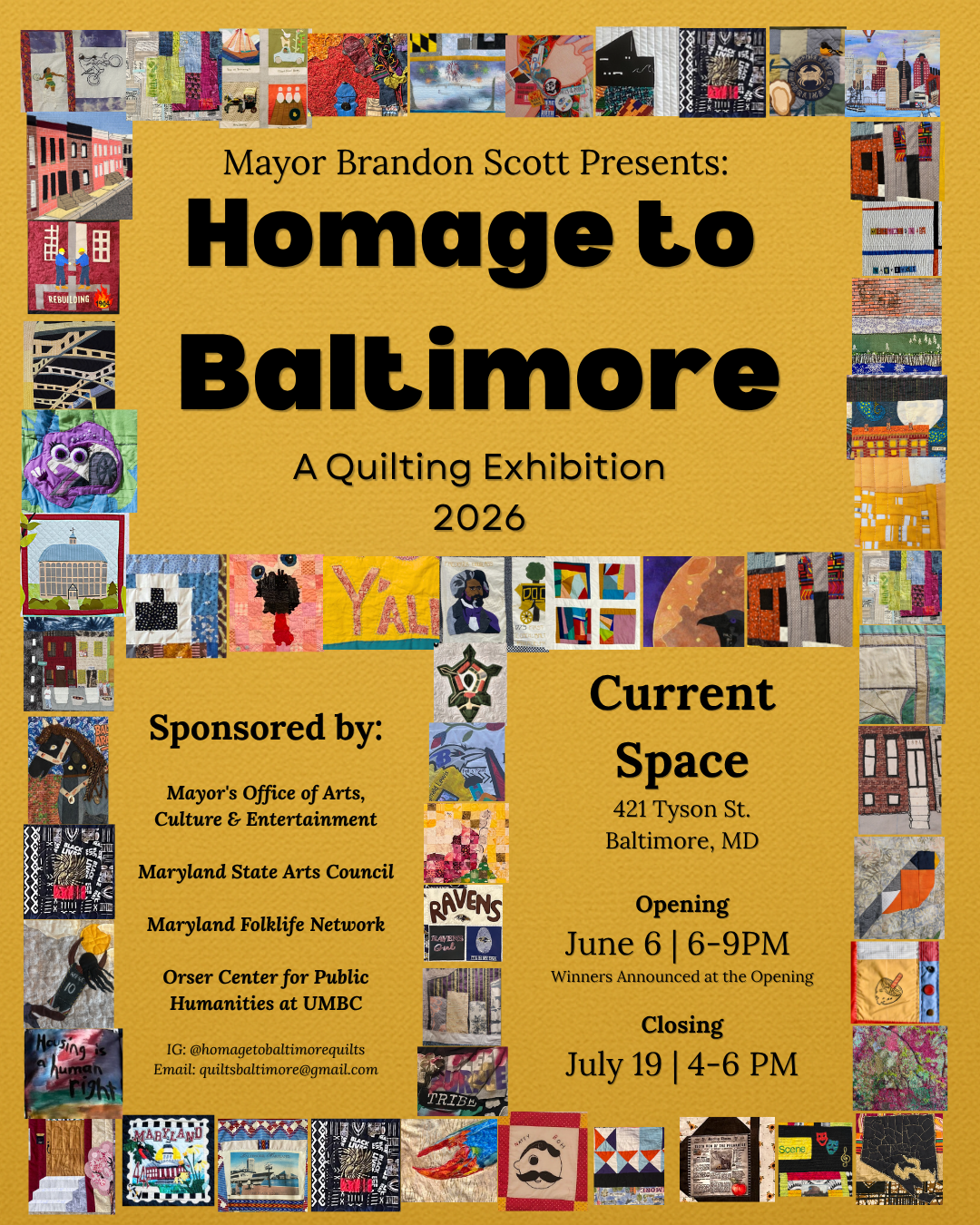
Quilting has always been…stitched… into Baltimore’s story. From practical bedcovers to decorative works of art, quilts reveal connections to global textile and dye trades while grounding themselves in the city’s working-class traditions. Baltimore’s most famous contribution to this legacy is the Baltimore Album Quilt, a mid-19th-century style known for its elaborate appliqué blocks—floral motifs, patriotic emblems, and personal dedications—combined into one-of-a-kind community heirlooms. In 1981, Mayor William Donald Schaefer celebrated this tradition with a citywide quilt competition that drew makers from across Maryland. Exhibits at City Hall and the Baltimore Museum of Art showcased the artistry of local quilters, with a $1,500 grand prize going to a striking black, white, and gold geometric design inspired by the city’s iconic marble stoops. The winning quilt with the marble step design captured Baltimore’s rowhouse traditions, while dozens of other prizewinners reflected the breadth of Maryland quilting—many of which can now be seen on this website. Among the participants was Mimi Dietrich, whose quilt from the event now resides in the Maryland Center for History and Culture. This history is now being carried forward 45 years later. With quilting communities still active across Baltimore—from guilds to classrooms to living rooms to community workshops—the revival builds on a strong foundation. The new competition will culminate in an exhibition opening June 6, 2026 at Current Space.
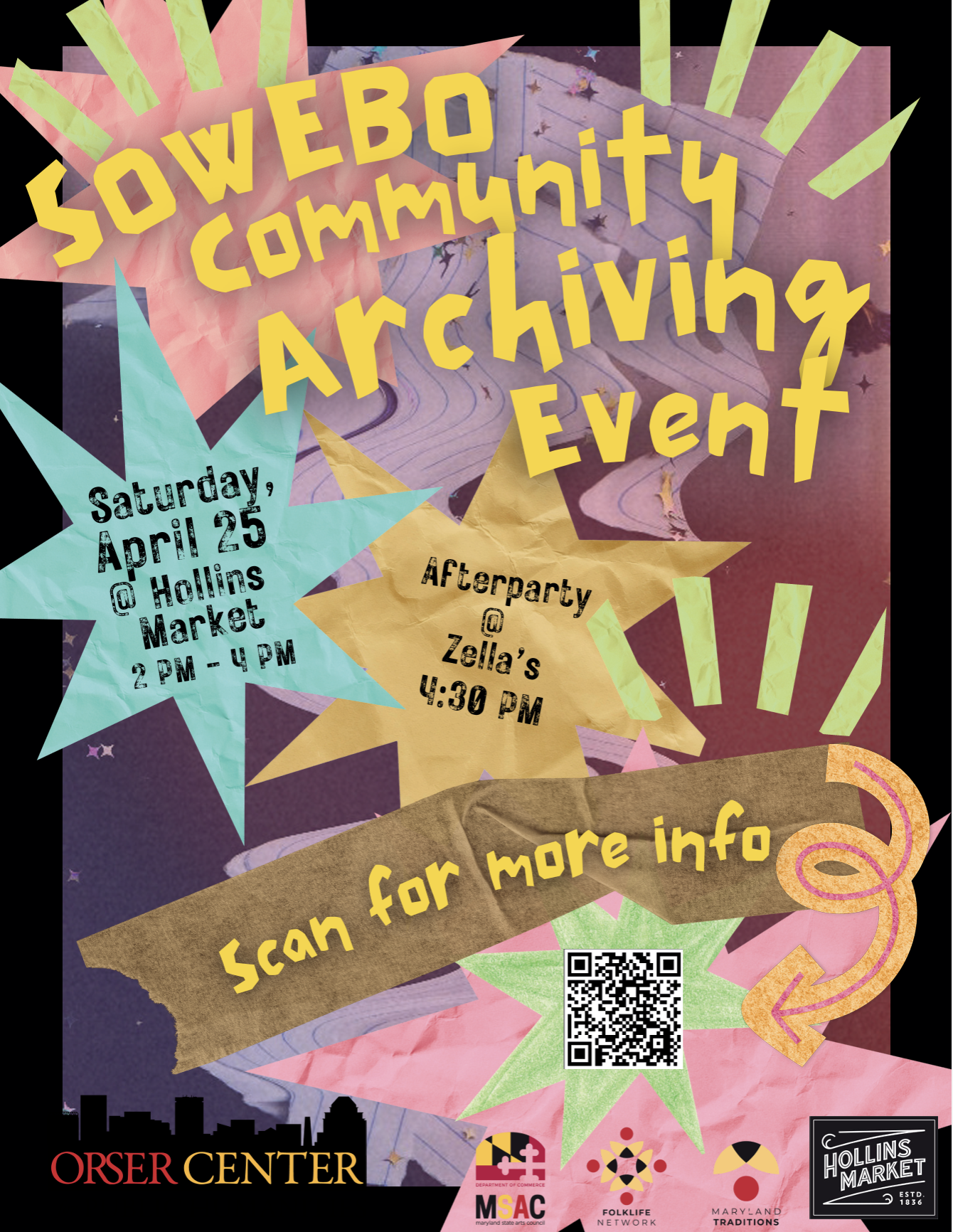
The Sowebo Community Archiving Event will provide a chance for residents to engage with past public history and cultural documentation projects as part of UMBC’s Baltimore Traces: Communities in Transition project and offer suggestions for building a collective community archive for the future in partnership with the Maryland Traditions Archives at UMBC and to assist residents in documenting and preserving their own experiences.
With a focus on local cultural traditions—such as the rich history of Baltimore’s Hollins Market, local neighborhoods like Poppleton, local arabber horse-and-wagon street vendors, and local street art—we are inviting those who live and work in the area to share their memories and learn more about their neighbors.
Afterparty at Zella’s at 4:30pm for the last weekend of the Sowebo Streets: 40 years of street photography in Southwest Baltimore exhibit.
Even if you cannot make it, you can still fill out these online surveys at any time:
This event is open for full participation by all individuals regardless of race, color, religion, sex, national origin, or any other protected category under applicable federal law, state law, and the University’s nondiscrimination policy.
In April 2025, the new Orser Center for Public Humanities debuted at an event at UMBC’s Library Gallery with a packed crowd. The evening was a celebration of public humanities work in and around Baltimore with a panel discussion on the Chicory exhibition “Soul of the Butterfly,” designed byMarkele Cullins, Visual Arts, UMBC ’18, UCLA, MFA candidate. The event included a panel discussion on community engagement in Baltimore with Patrick Oray (Bard Early College), Keegan Finberg (UMBC, English), Mary Rizzo (Rutgers, American Studies), Nicole King (UMBC American Studies), Markele Cullins (UCLA), and Sarah Fouts (UMBC American Studies). Following the panel we will have performances by Rejjia Camphor, A’niya Taylor, and Slangston Hughes.
The Orser Center for the Study of Place, Community, and Culture was founded in 2011 when Ed Orser retired from the Department of American Studies at UMBC. Ed Orser earned a Ph.D. in American Studies from the University of New Mexico and came to UMBC in 1969, just one year after the uprisings of 1968 following the assassination of MLK Jr. and just three years after UMBC was formed.
Ed was one of the founding faculty members of the Department of American Studies. He served numerous terms as chair of the department and developed foundational courses still taught today. Ed was kind and thoughtful and committed to his students, his city, and especially his family.
Ed Orser was doing public humanities before we even called it that. Ed was just doing the good work that mattered. One of my favorite Ed Orser quotes (Richard Byrne ‘86,Locale Hero, UMBC Magazine, Summer 2009):
“How do you ground the American experience in something you can get your hands around? I always thought it was helpful to bring things down to a certain scale. Maybe because that’s as much as I could try to get my mind around, but also it is because in some ways, that’s where we live our lives.”
The public humanities is where we live our lives.
Ed Orser will be remembered for his contributions to how we understand cities, especially Baltimore, and issues of environmental justice. He influenced generations of students and mentored many faculty members (myself included). His kindness, humility, and generosity are greatly missed in the Department of American Studies, the Orser Center, and across the UMBC campus.
Ed’s memory will always remind us of where we do this work, where we live OUR lives and why we do it … to build better futures.
The things that connect us across differences are strong and deep. The Orser Center for Public Humanities continues the work of meeting people where they are and doing the best we can to understand one another even in difficult and divisive times.
As we look back on the history and roots of the Orser Center we also look forward with hope and determination. Sometimes that’s enough. And sometimes it’s not and we have to sacrifice and we have to stand up and we have to lose some of our comfort to be able to make sure we wake up in a world we want to live in.
Where we live our lives is up to us. We can build new worlds together through the work of the humanities.
The Orser Center is part 1. UMBC’s Public Humanities Program is part 2 of the story…
In 2016, one year after the uprisings following the death of Freddie Gray while in police custody, we launched a working group to build a program in Public Humanities at UMBC. The working group was co-chaired by me and Jessica Berman, director of UMBC’sDresher Center for Humanities at the time. We built anadvisory committee from across the College of Arts, Humanities, and Social Sciences.
In fall 2019, the Dept of AMST welcomed Michael Casiano, Sarah Fouts, and Ashley Minner as full time faculty members in public humanities, joining me and Tamara Bhalla–our current department chair. It was an amazing moment that became precarious when a global pandemic emerged and numerous members of our BFS community fellows team were experiencing displacement from their homes and sacred spaces in Baltimore City.
We worked diligently for three years planning the program. This work all culminated in our minor in Public Humanities in 2019 and theBaltimore Field School (BFS) project in 2020, funded by grants from the Mellon Foundation and ACLS, tobuild ethical university/community partnerships at UMBC. We sought to honor and work with the people already doing the good work on the ground in the city.
At that difficult moment in 2020, we should remember that we rose to the challenge. We did not stop because the work was difficult. We persevered.
We simply kept doing what we do–the good work that bends towards justice andhumanities for all. The humanities are public when they serve everyone and are beholden to no one individual or institution.
The public good is also the collective good.
So, in conclusion, I want to return to that quote from Ed Orser.
“I always thought it was helpful to bring things down to a certain scale… because in some ways, that’s where we live our lives.”
So, keep living your lives and doing the good work that can build new and brighter futures. That is the collective goal of public humanities and higher education in their best forms.
Onward towards more meaningful Public Humanities work.
Nicole King, co-director / Professor, American Studies / nking@umbc.edu
“How do you ground the American experience in something you can get your hands around?” asks Orser. “I always thought it was helpful to bring things down to a certain scale. Maybe because that’s as much as I could try to get my mind around, but also it is because in some ways, that’s where we live our lives.”
– W. Ed Orser, quoted in Locale Hero, UMBC Review, by Richard Byrne
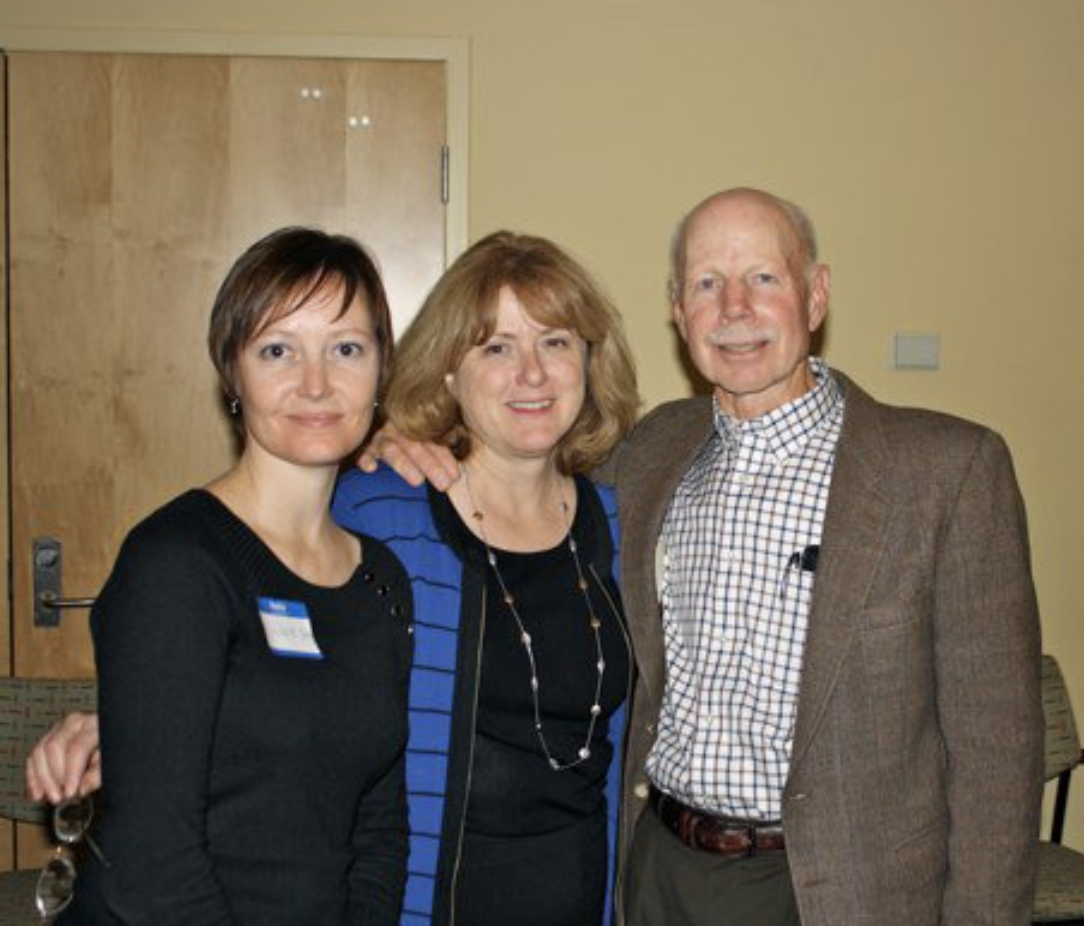
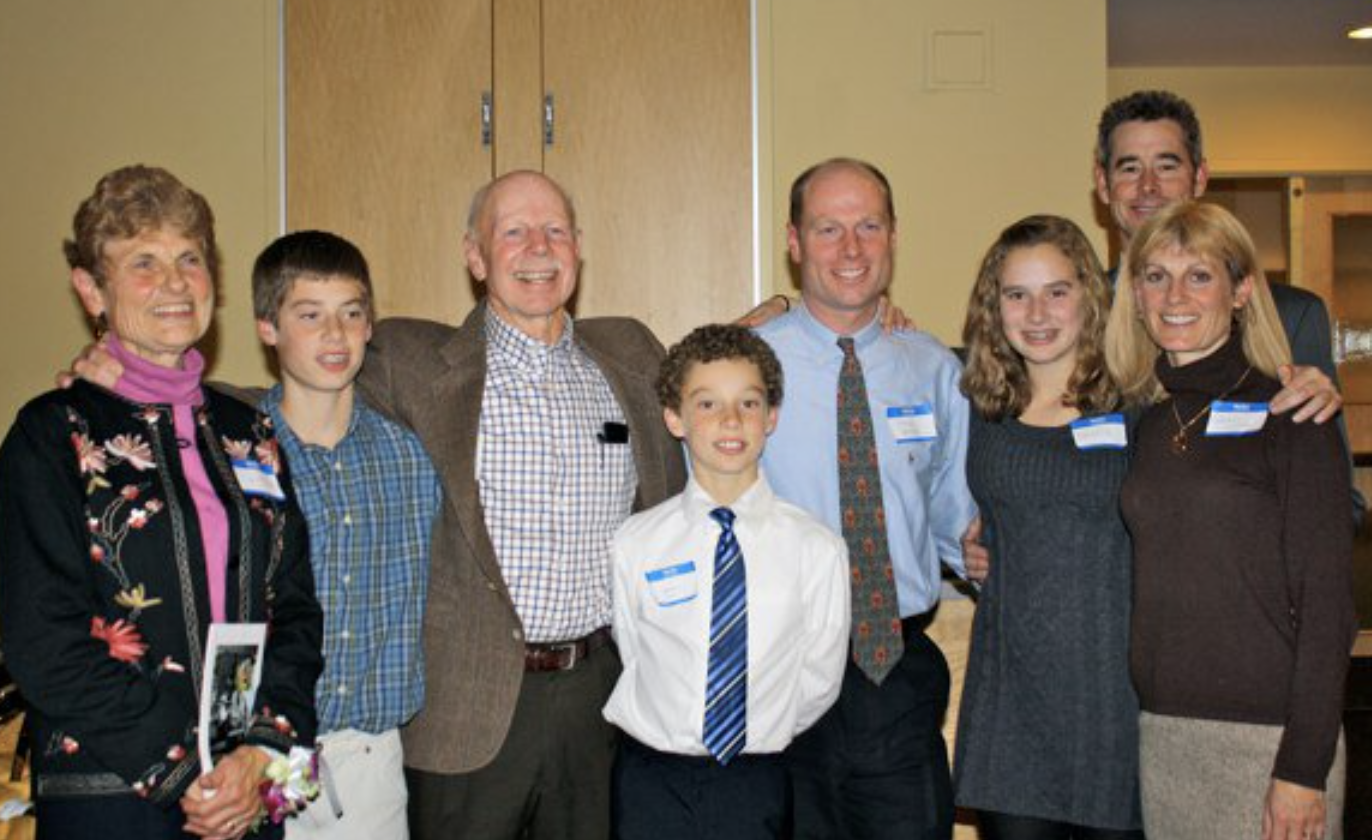
It is with great sadness that we share the news that W. Edward (Ed) Orser passed away on Monday, January 8, 2024. Ed was a beloved professor and researcher in the Department of American Studies at UMBC for over forty years. Upon his retirement in 2010, and in his honor, the Orser Center for the Study of Place, Community, and Culture was established at UMBC to foster innovative collaborations among scholars, students, and local community organizations across the disciplines whose research and teaching explore place-based study, especially focused on the Baltimore region.
Ed Orser earned a Ph.D. in American Studies from the University of New Mexico and came to UMBC in 1969, just four years after the university was formed, as one of the founding faculty members of the Department of American Studies. He served numerous terms as chair of the department and developed foundational courses still taught today.
Ed’s teaching and research interests were always closely connected. His courses on “Community in American Culture” and “American Environments: Landscape and Culture” not only became central parts of the American Studies curriculum, but led to a variety of research projects with students and to themes that became the focus of his own scholarship. Ed’s work as a publicly-engaged scholar in the local community was an inspiration for the Minor in Public Humanities for the College of Arts, Humanities, and Social Sciences (CAHSS), which is fittingly located in the Orser Center in American Studies.
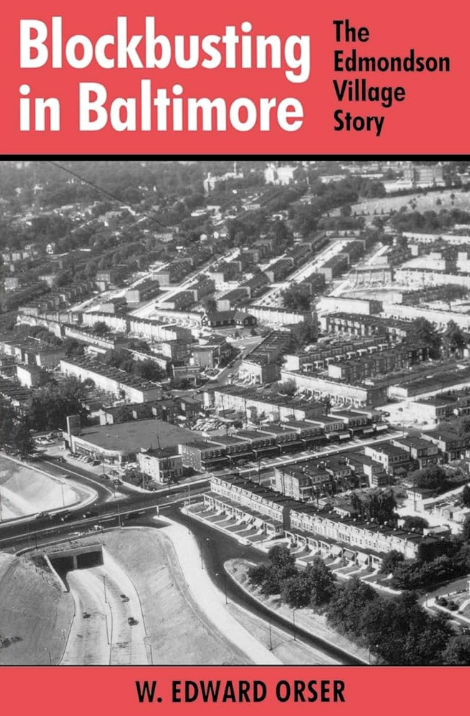
Ed’s publications explore the social and cultural dynamics of the Baltimore region. His examination of the phenomenon of massive racial change in West Baltimore during the 1950s and 1960s led to the first book-length study of blockbusting and its consequences in post-World War II cities: Blockbusting in Baltimore: The Edmondson Village Story (University Press of Kentucky, 1994, 1997). Blockbusting in Baltimore was an influential, and widely imitated, text that is still cited in emerging scholarship on Baltimore and cities like it.
A collaborative research and teaching project with Professor Joseph Arnold of the History Department, resulted in an on-campus exhibition and the co-authored publication of From Village to Suburb: Catonsville, 1880-1940 (Donning Publishing Company, 1989). His first book, Searching for a Viable Alternative: The Macedonia Cooperative Community, 1937-1958 (Burt Franklin, 1981) explored the effort by a group of pacifists to establish an alternative community in North Georgia during and following World War II.
Articles on related topics have appeared in such journals as American Studies, Church History, the Maryland Historical Magazine, the International Journal of Oral History, the Public Historian, and the Journal of Urban History. Ed’s interest in environmental history in the Baltimore area resulted in publication of The Gwynns Falls: Baltimore Greenway to the Chesapeake Bay (The History Press, 2008) and the article, “A Tale of Two Park Plans: The Olmsted’s Vision for Baltimore and Seattle, 1903” (Maryland Historical Magazine, Winter 2003). His public history activity included co-authorship of The Gwynns Falls Trail Master Plan (with Diana Balmori, et al., 1995).
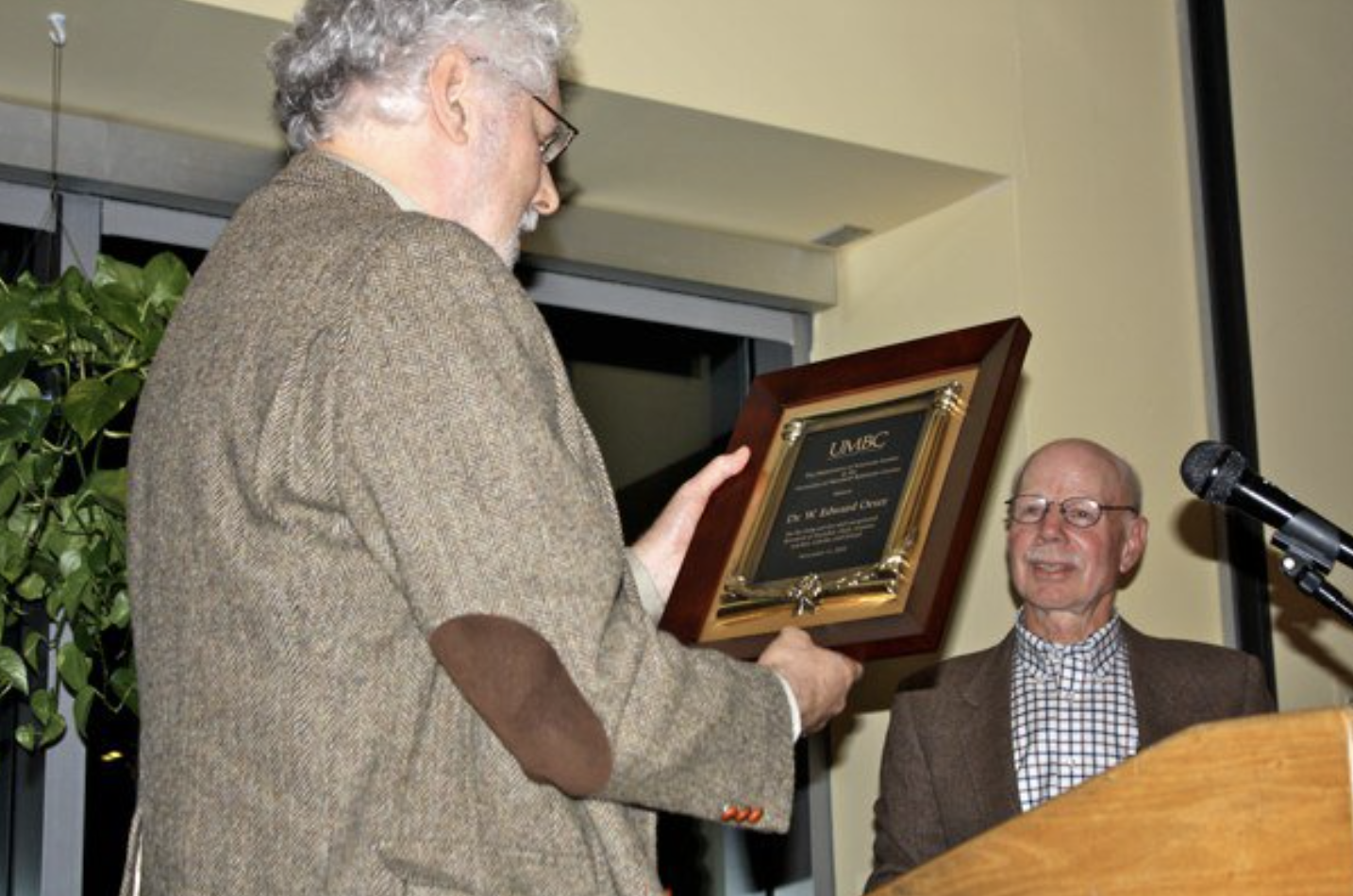
Ed received the UMBC Presidential Teaching Award in 1999 and the University System of Maryland Regents Award for Excellence in Teaching in 2003. The Baltimore Historical Society conferred Historian Honors recognition upon him in 2007.
Though deeply committed to Baltimore and UMBC, Ed also taught American Studies in a variety of international settings. In 1990-1991 he served as Senior Fulbright Lecturer at the University of Zagreb in Yugoslavia. In 2007, he taught in the American Studies Department at the University of Swansea in Wales. Prior to coming to UMBC, Ed served as a United States Peace Corps Volunteer teacher in Ethiopia. In his substantial service role at UMBC he was President of the Faculty Senate (1996-8) and a member of numerous university committees.
In retirement Ed served as president of the Friends of Maryland’s Olmsted Parks & Landscapes, a preservation and advocacy organization, and as Coordinator of the Urban Resources Initiative Internship program, which places interns with projects in Baltimore’s Department of Recreation and Parks and the Parks & People Foundation.
Ed and his wife Jo lived for many years in the Hunting Ridge neighborhood of Baltimore and he was known to bike to the UMBC campus. Ed and Jo recently moved to Charlestown Senior Living in Catonsville, where Ed continued to enjoy connecting with UMBC alumni and faculty.
Ed will be remembered for his contributions to how we understand cities, especially Baltimore, and issues of environmental justice. He influenced generations of students and mentored many faculty members. His kindness, humility, and generosity will be greatly missed in the Department of American Studies, the Orser Center, and across the UMBC campus.
We send our sincere condolences to Ed’s beloved family and invite the UMBC community to attend a memorial service celebrating Ed’s long and rich life at 11 a.m. on Saturday, January 20, at Salem Lutheran Church, 905 Frederick Road in Catonsville. All who knew and loved him are invited to attend. In lieu of flowers, the family requests contributions be made to Salem Lutheran Church (www.Salem-Catonsville.org/) or the Charlestown Scholars’ Fund (www.ccicharlestown.org/giving/scholars-fund).
In honor of Ed’s long contributions to the fields of urban and American studies, the Department of American Studies and the Orser Center are co-sponsoring a Humanities Forum lecture by noted urban historian Davarian Baldwin on May 1, 2024. American Studies & the Orser Center will continue to find ways to recognize the work of Ed Orser and his engagement with the study of place and community in the Baltimore region. A donation can be made to support that work in Ed’s name on the Department’s Giving Page.
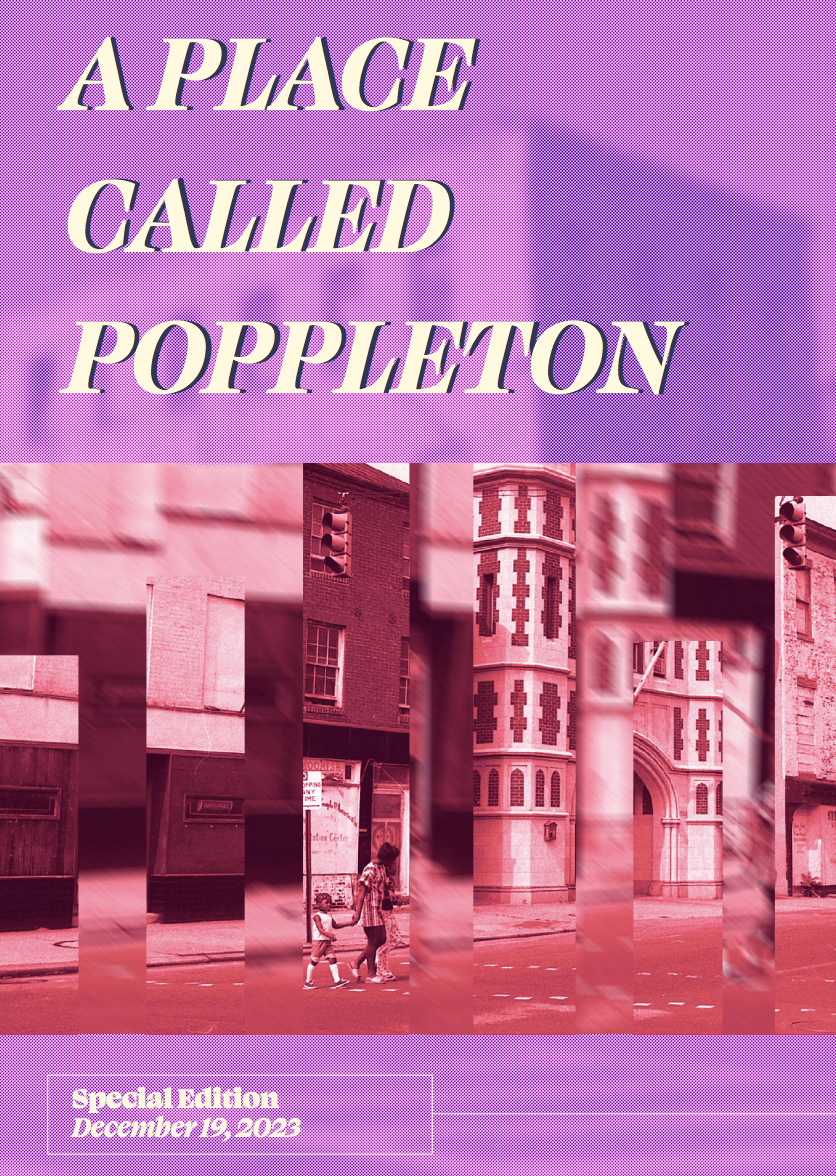
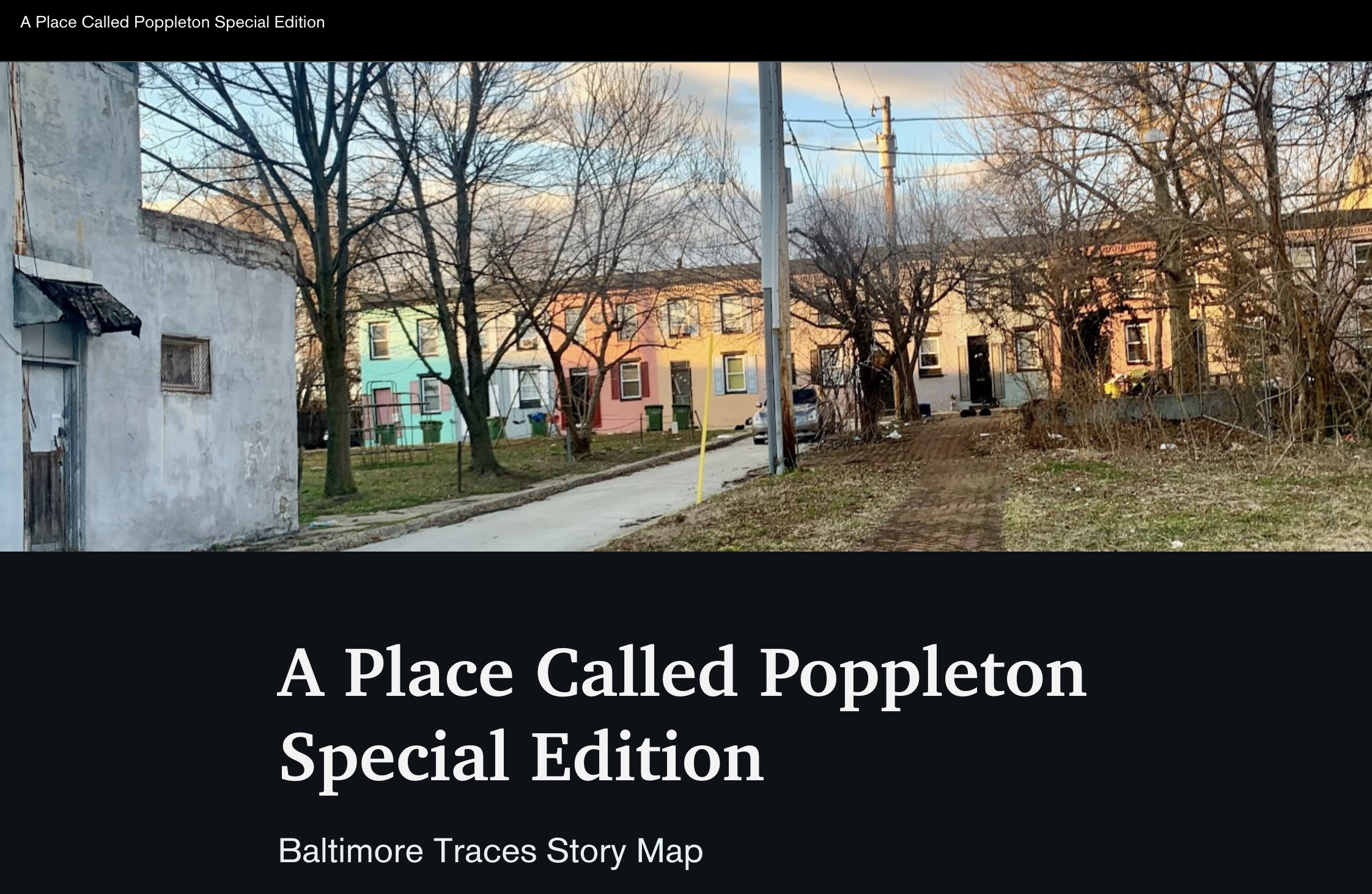
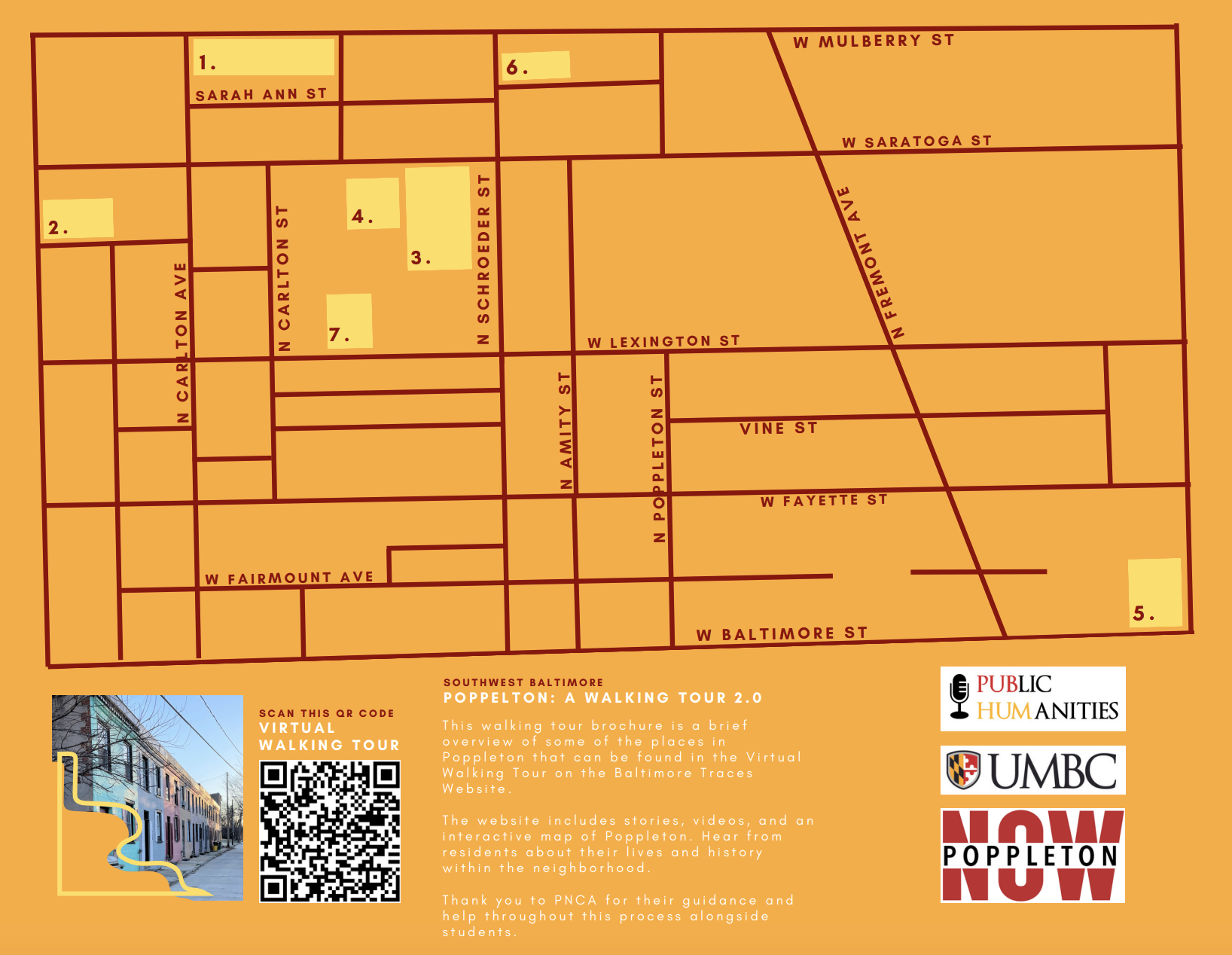
In Fall 2023 we produced special edition of the A Place Called Poppleton zine (designed by Baltimore-born and Los Angeles-based artist Markele Cullins). We are sharing a walking tour brochure (designed by Baltimore artist Alexis Tyson) and an ArcGIS virtual walking tour designed by Tristan Diaz with research from American Studies students from spring 2021 to fall 2023. We debuted short films produced by Prof. Bill Shewbridge’s Media & Communication Studies students in 2023 at our final event at Allen A.M.E. Church in Poppleton on Tuesday, December 19, 2023.
In February 2020, the Eaddy family received a condemnation notice for their home, which had been in the family since 1992. In summer 2020, the Baltimore Traces: Communities in Transition project began documenting Poppleton’s long history of failed redevelopment and preserving the sense of place and community created by the Eaddy family and other residents, churches, and local businesses.
In 2021 and 2022, the work of cultural documentation—place-based research and oral history interviews—shifted from documenting the ongoing displacement of residents in Poppleton to organizing for change. Baltimore City has been taking Black people’s homes using eminent domain–the power of the state to take private property for public use–since 2004 for a misguided redevelopment project linked to the move of the University of Maryland BioPark into Poppleton and West Baltimore.
We organized to Save Our Block and to fight for equitable development in Baltimore. On July 18, 2022, Mayor Brandon Scott and Housing Commissioner Alice Kennedy announced that the Eaddy family would keep their home and the Sarah Ann Street alley houses would be redeveloped for homeownership by Shelley Halstead of Black Women Build. This win was a new beginning (not an end) in the fight for equitable and community-led development in Poppleton and Baltimore.
With this zine, we present stories of residents and some of the community assets in Poppleton: 1) Sarah Ann Street Local Historic District 2) St. Luke’s Youth Center 3) the Southwest Sports and Fitness Alliance and the Poppleton Rec Center 4) Excel Academy and 5) Allen A.M.E. Church.
Watch the oral history interviews for A Place Called Poppleton (fall 2023):
We thank Sonia Eaddy and the Poppleton Now Community Association members for inviting us into their neighborhood. And thanks to Allen A.M.E. Church and Pastor Brenda White (UMBC alumna) for hosting us for this community celebration. A special thanks to all the people we interviewed this semester: Diane Bell, TyJuan Hawkins, Francina and Sterling Walker, Pat Nickerson, Anthony Hudgins II (Executive Director, Southwest Sports and Fitness Alliance, Inc.) and the legacy members of Allen A.M.E. Church–Odell and Gay Jones, Betty Jean Singletary, Shirley Luallen, and Charlene McClain Boykin.
We recently finished our week-long summer intensive. Thanks to everyone who make it a successful week. See more info and full schedule here: https://baltimorefieldschool.org/?p=3155
We hope many relationships were built and ideas sparked. See upcoming events by community fellows:
Welcome to the summer edition of “Notes from the Field.” We are thrilled to present a new edition filled with updates, highlights, and valuable information about opportunities and community events taking place throughout the summer as well as highlighting recent past events from fellows.
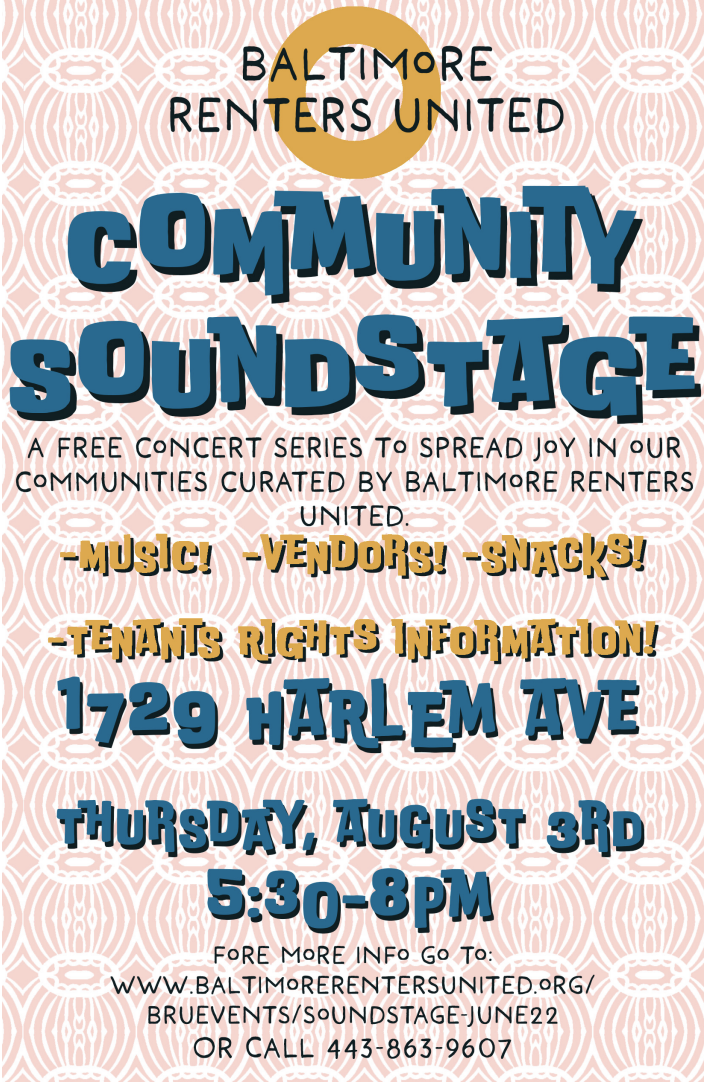
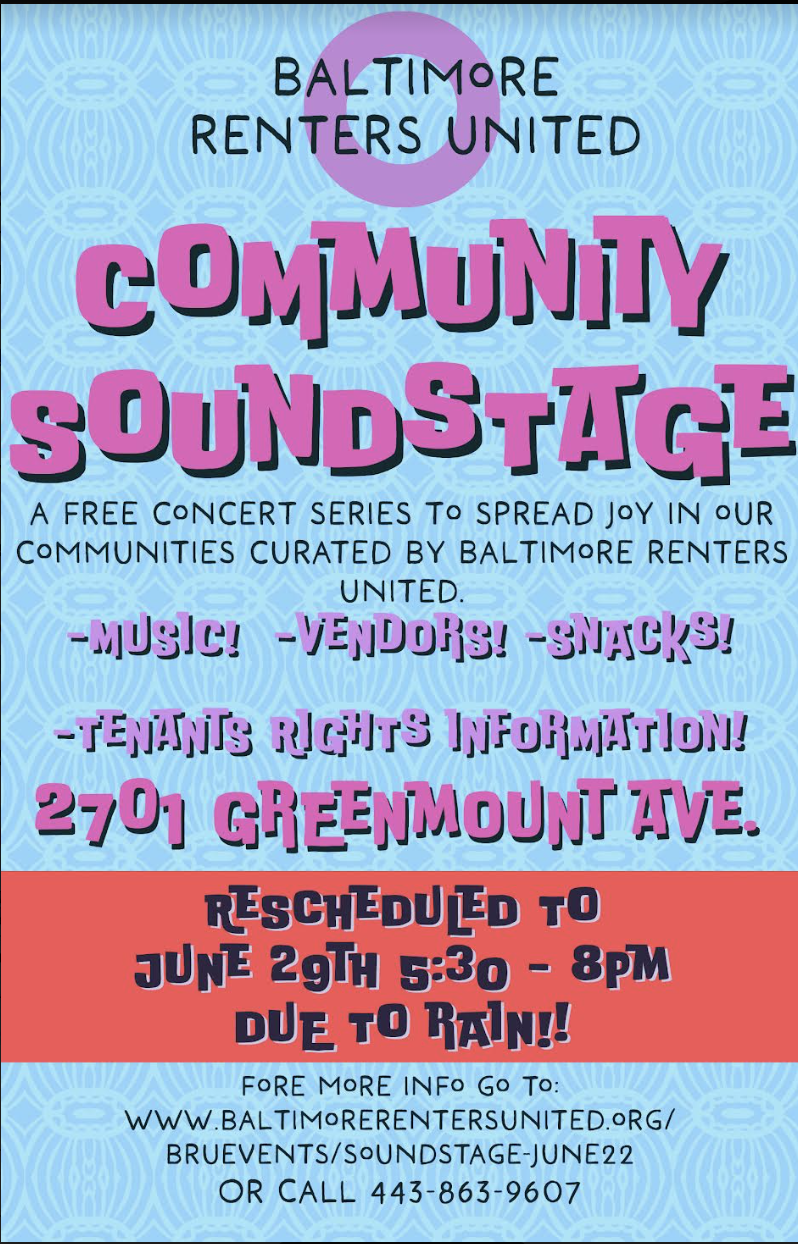
Tisha Guthrie an organizer with Baltimore Renters United, member of the Inclusionary Housing Coalition, and secretary of the Poppleton Now Community Association. As a fellow Tisha developed the Bringing Our Community Joy (BOC Joy) project to address the trauma in Baltimore neighborhoods through providing space for collective joy. Her third Community Soundstage–reclaiming vacant lots for community celebration–is now Thursday, June 29 in the Waverly neighborhood. Please spread the word and connect Tisha with any organizations in the waverly area: zigtgut@gmail.com
Through the Assembling Voices Fellowship, Incite at Columbia awards artists, activists, organizers, workers, and others $25,000 in support of innovative public programming.
Your community, your vision, our support. Assembling Voices is a Fellowship for artists, writers, scholars, journalists, performers, activists, workers, and others with compelling ideas for public initiatives that advance our mission—catalyzing conversations that lead to more just, equitable, and democratic societies.
BETTY BLAND-THOMAS COMMUNITY ORGANIZING FEATURE IN NEWS STORY
Betty’s community organizing was featured in a recent news story in the Baltimore Banner by Clara Longo de Freitas, “Sharp-Leadenhall residents push back on zoning change to allow apartment complex.” Both Community Fellows Betty and Tisha Guthrie were quoted in the article and are working across the city to pass an Inclusionary Housing Law in Baltimore.
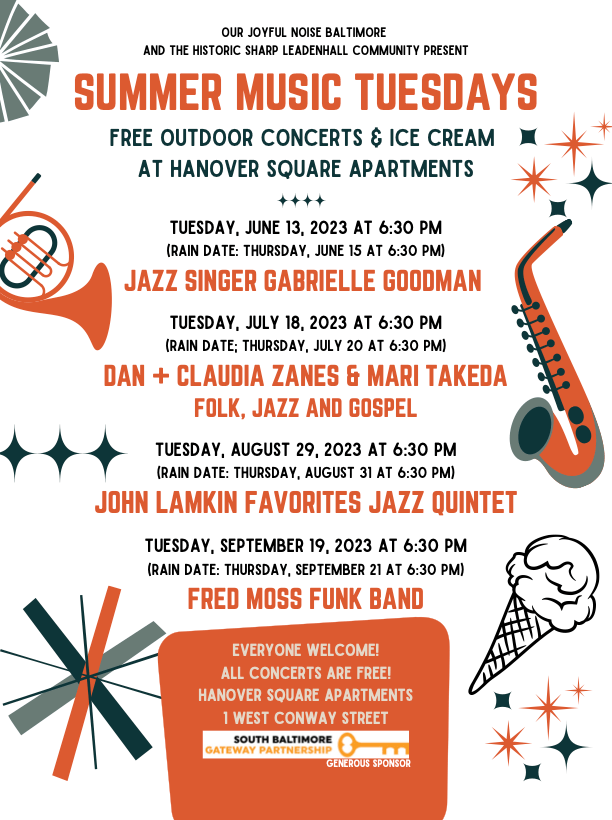
Bland-Thomas invites everyone to Summer Music Tuesdays, a partnership between Joyful Noise Baltimore and the Historic Sharp Leadenhall Community. Held near senior housing, all generations are welcome to enjoy vibrant music and fun. The series represents the partners’ unwavering commitment to restoring Historic Sharp Leadenhall’s rich heritage and igniting a brighter future. Come join the celebration.
Upcoming Events in Sharp Leadenhall:
Historic Sharp Leadenhall Community Meetings are held the last Thursday of every month, next meeting June 29th from 6pm to 7:30pm at Martini Lutheran Church 100 W. Henrietta St. from – Guest speaker from MOED office Mr. Mark Hooper
Historic Sharp Leadenhall is hosting its first in series Lecture called “A Slice of Historic Sharp Leadenhall.” Our focus is to tell the stories of the rich History and Culture of Afro-Americans from 1700-1800’s in our communities. Sunday, July 9th from 2pm to 3:30pm in the Old Otterbein Church 112 W. Conway. Guest Speakers Eric Holcomb Executive Director of CHAP and Rev. Bonnie McCubbin of Old Otterbein Church will share some of the rich history of the church, which is 252 years old.
Next Outdoor Concert sponsored by Joyful Noise and Historic Sharp Leadenhall is Tuesday, July 18th at 6:30pm at Hanover Square Apts. 1 W. Conway Street.
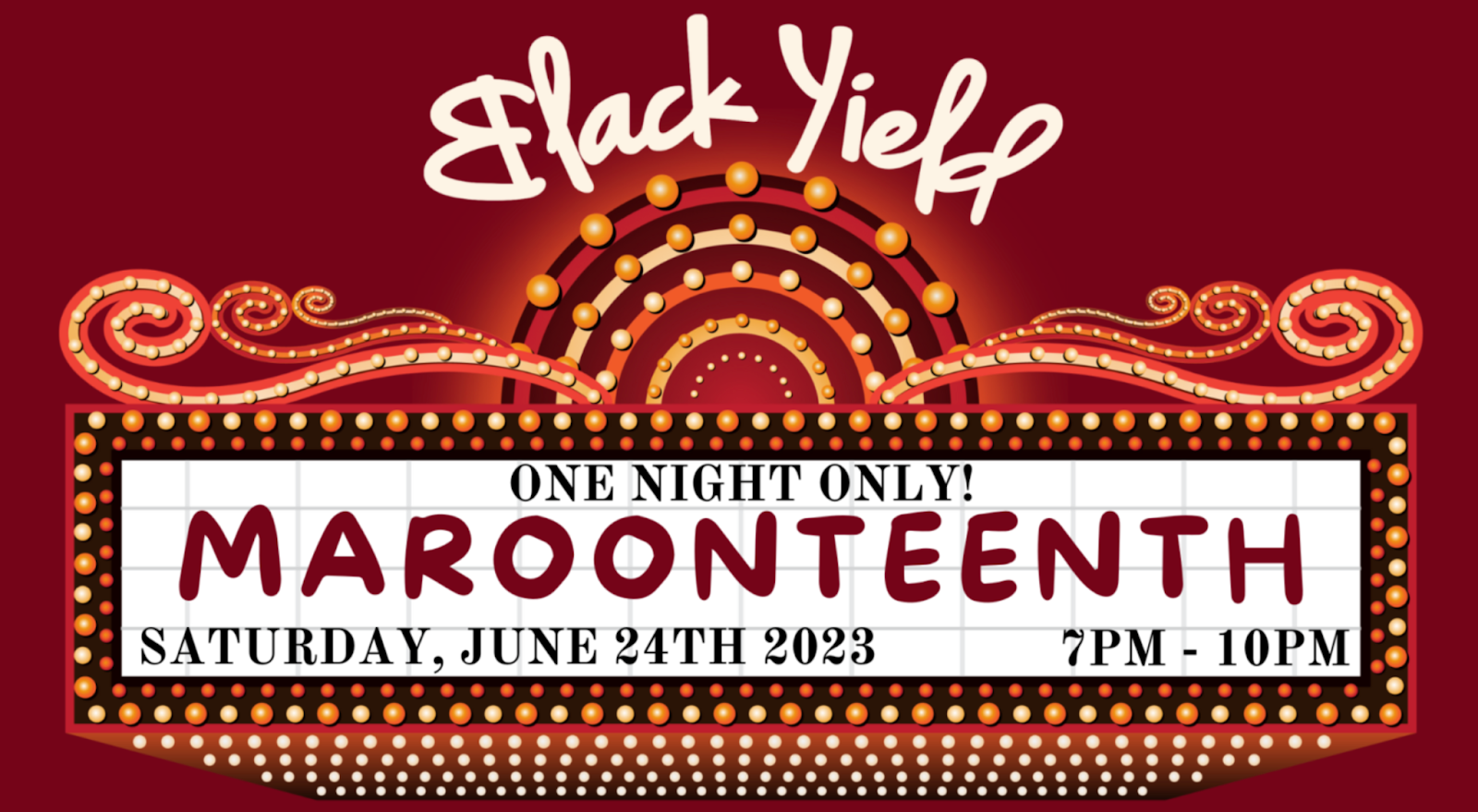
BLACK YIELD INSTITUTE AND FELLOW ERIC JACKSON PRESENT MAROONTEENTH CELEBRATION SATURDAY JUNE 24TH
Maroonteenth is Black Yield Institute’s celebration of freedom in its many shapes and forms.Rather than live in bondage, maroons risked their lives.
The Maroonteenth event commemorates our ancestors who escaped slavery to establish their own settlements and define freedom for themselves. Black Yieldcarries on Maroon energy in all of their work and Fellow Eric Jackson invites all to join in celebrating what the Maroons accomplished and paying tribute to what they sacrificed.
This year’s theme is the Harlem Renaissance! There will be a 1920s dance contest, a best-dressed contest, and delicious soulful food and drinks.
Also, BYI encourages people to buy a ticket and donate it to someone who wants to attend but doesn’t have the money.
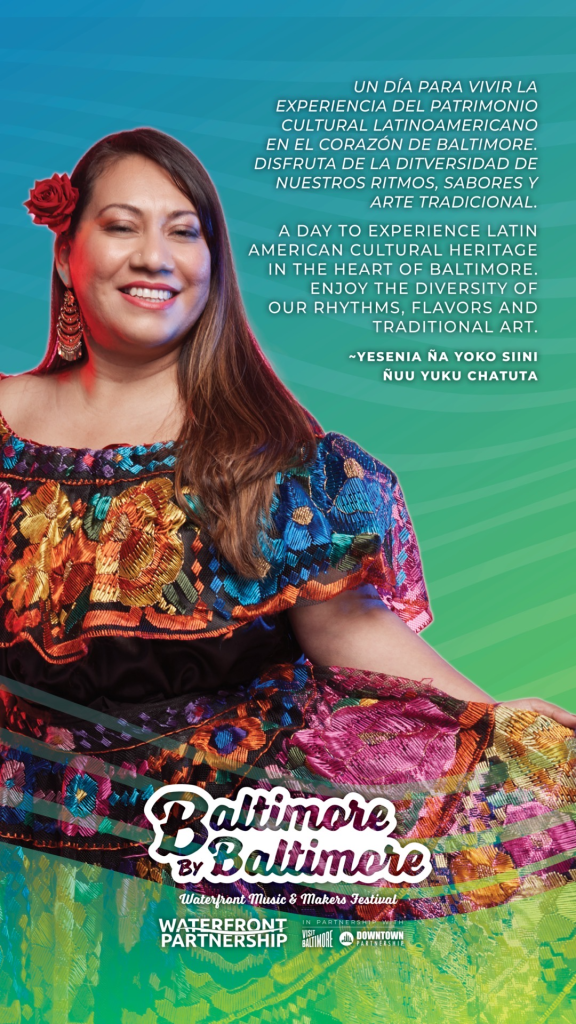
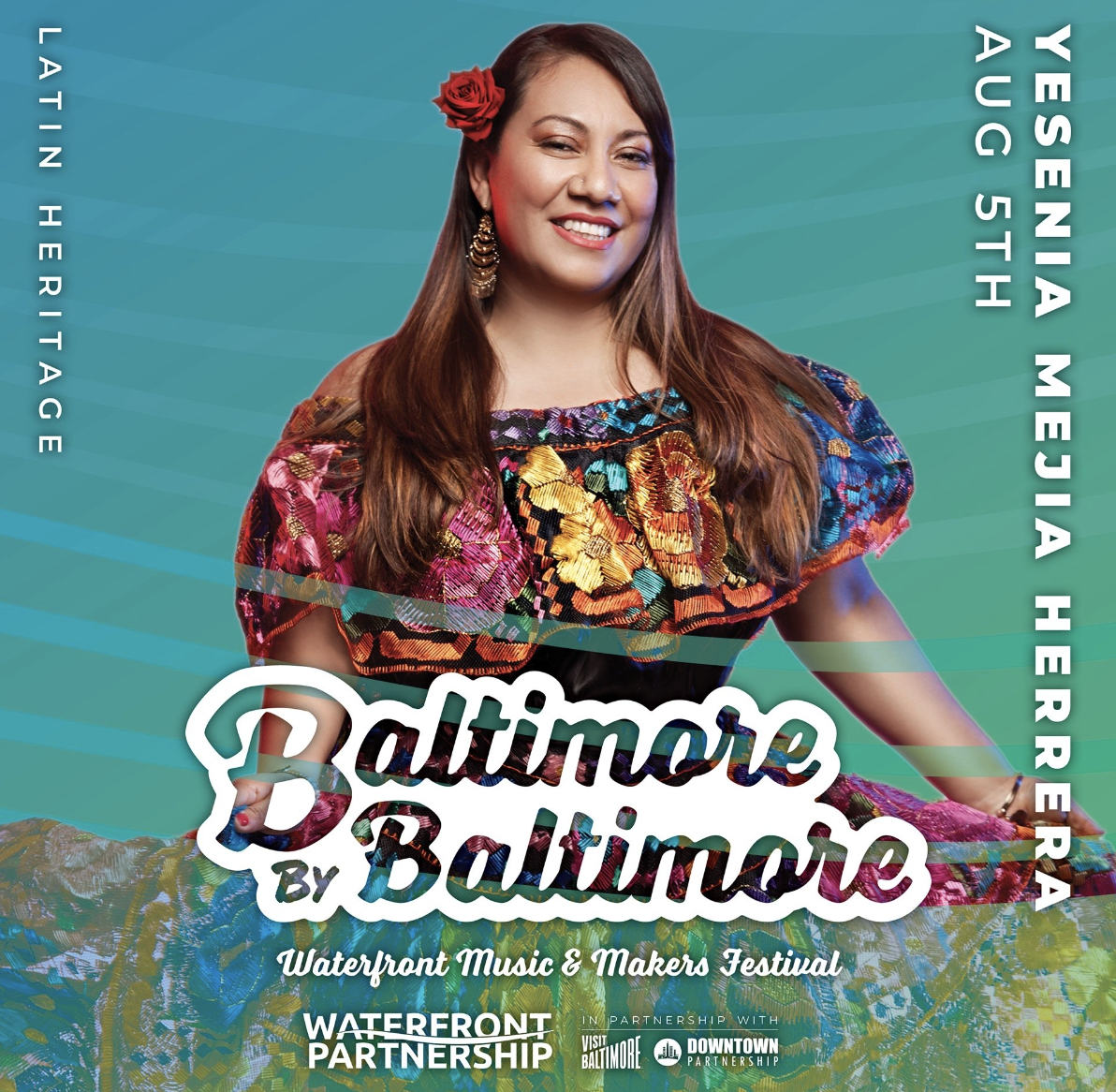
FELLOW YESENIA MEJIA HERRERA PRODUCES LATIN HERITAGE PROGRAM AT BALTIMORE X BALTIMORE FESTIVAL
Saturday, August 5th | 12:00 – 8:00PM | Inner Harbor Amphitheater @ Light St. & Pratt St. For info here.
Yesenia Mejia Herrera is an interdisciplinary artist, activist, mother, and educator from Oaxaca, Mexico, based in Baltimore, MD since 2008.Taking after her grandfather, Yesenia developed a love for music that has evolved into an art form of its own by learning to sing in Tacuate language, honoring her grandfather and the Tacuate community.
Amidst the homogenization of Latinx cultures and absences of indigeneity in Baltimore’s Latinx community, it is important to Yesenia to create content that values Indigenous knowledge and wisdom and that allow these traditions to be transmitted to future generations. As a visual artist, her art is committed to build community and enhance the transformative beauty of Latin American culture. She does much of this work through her role as Director of Creative Alliance’s CIELO (Creative Immigrants of Latin America Origins) Department where she co-creates opportunities for growth, education, and a sharing of culture through projects like, “Artesanas”, “Jovenes en Acción”, “Artesanitos”, “Tianquiztli” among others. She is a current fellow of BFS 2.0 and received the Mayor’s Hispanic Heritage Award for best Educator and Annual Community Service Award by the Latino Provider’s Network in 2021.
UMBC Fellow Annie Byrd announces the Community Leadership program at UMBC will have a table at the Baltimore by Baltimore event on July 1, and August 5.
An Invitation to Participate in Research Study about Baltimore Schools
Do you have experiences with K-12 Baltimore schools? Do you have priorities and dreams about what the schools in your community can be and do? Do you know your neighborhood well, and want to share it with others? We invite you to share your thinking with our research team.
The Imaging Research Center (IRC) recently received a UMBC grant to validate a virtual reality (VR) environment for future teachers to learn the multiplicity of factors that impact the achievement of elementary school students. The Systems Engagement and Exploration environment (SEEe), a VR system developed by the IRC, is designed to represent multiple data types in multiple ways (graphs, videos, conceptual diagrams) simultaneously. This project supports novice teachers in orienting to the array of factors shaping literacy teaching and learning.
We plan to collect qualitative data by inviting students, teachers, families, and community members to record interviews or self-made videos of their perspectives on schools and their relationship with communities. We also hope to include some “guided tours” of neighborhoods, mapping local community assets relevant to education. The goal of this project is to build pre-service teachers’ awareness of the communities in which they teach. We want our students to learn by listening to and learning from students, families, and community members, and to prepare them to continue to cultivate these relationships. This supports an asset-based and culturally responsive approach to teaching and learning, drawing on the funds of knowledge that already exist in school communities, rather than one that defines communities by their deficits.
If you are interested in participating or want to recommend someone we should connect with or ask to participate, please reach out to UMBC Fellow Amy Tondreau at amytondrea@umbc.edu.
Late Spring/Early summer highlights (past events)
Fellow Betty Bland Thomas recognized by the Neighborhood Design Center with an Award for Community Advocacy! The event took place at the Annual Awards and Volunteer Celebration held on June 3rd in Mount Rainier in Prince George’s County MD. Congratulations Betty!
Fellow Betty Bland-Thomas also hosted a Community Meeting of the Historic Sharp Leadenhall Neighborhood on May 25th at Martini Lutheran Church to discuss the exciting neighborhood initiatives as well as joyful and engaging summer plans for residents of all ages.
Fellow Curtis Eaddy II
Sowebo Festival – Curtis Eaddy II curated the Beautiful Side of Ugly stage and performed on Sunday, May 28. Congratulations Curtis! https://www.sowebofest.org/music
Curtis Eaddy II and Yesenia Mejia Herrera participated in the 11th International Digital Storytelling Conference “Radical Listening: Story Work for a Just Future” at UMBC on Tuesday, June 20.
OUR BIG SUMMER GATHERING – BFS 2.0 Summer Institute: July 17 – July 21
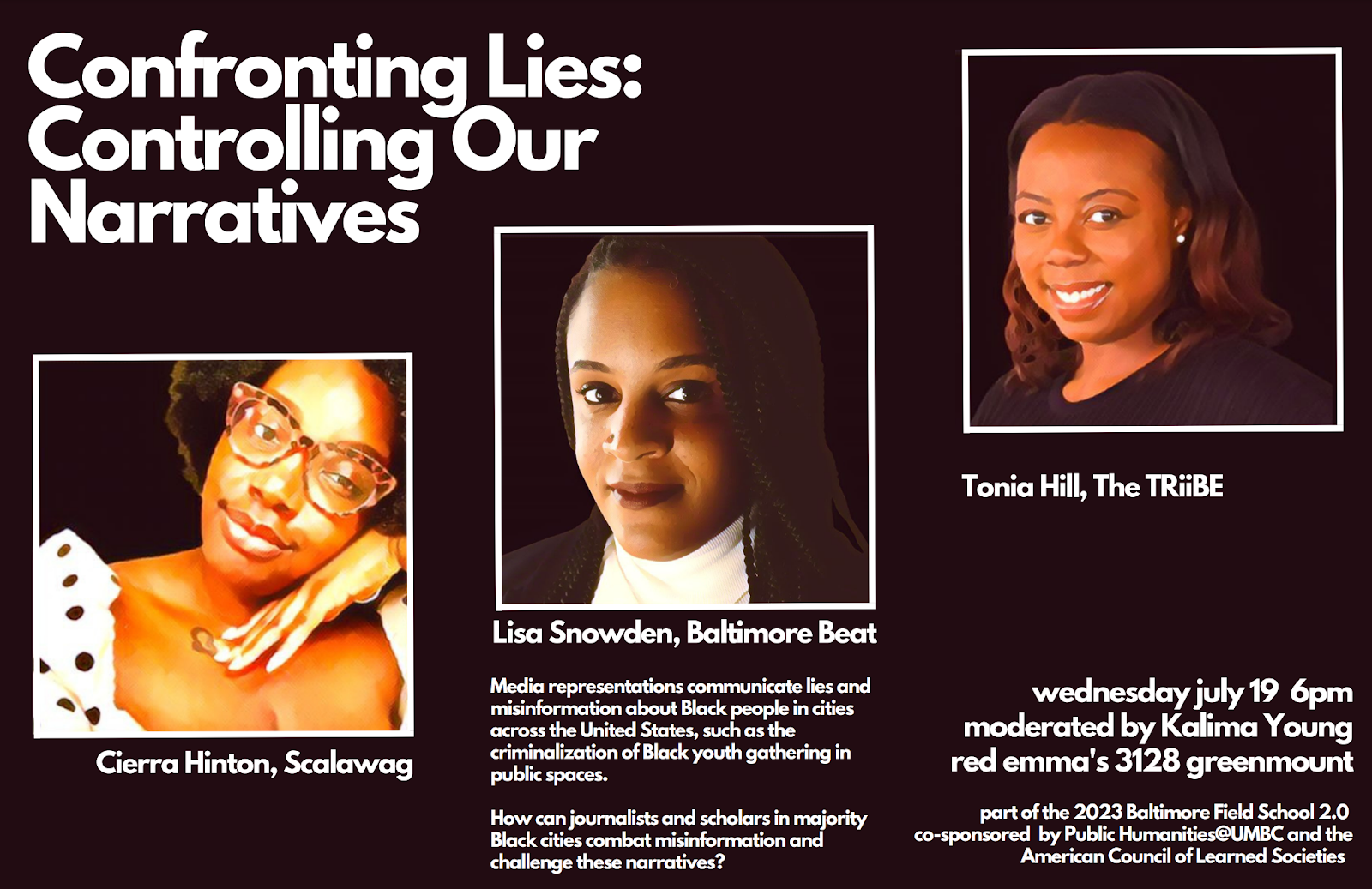
We will be contacting UMBC and Community Fellows to share the BFS 2.0 Schedule for July 14 – 21, 2023. Dean Kimberly Moffitt will welcome and kick off our week-long field school on the first day with UMBC Fellows & Community Fellows. We wanted to share a public event Confronting Lies: Controlling Our Narratives organized by Community Fellow Lisa Snowden at Red Emma’s on Wednesday, July 18. Register here and please spread the word.
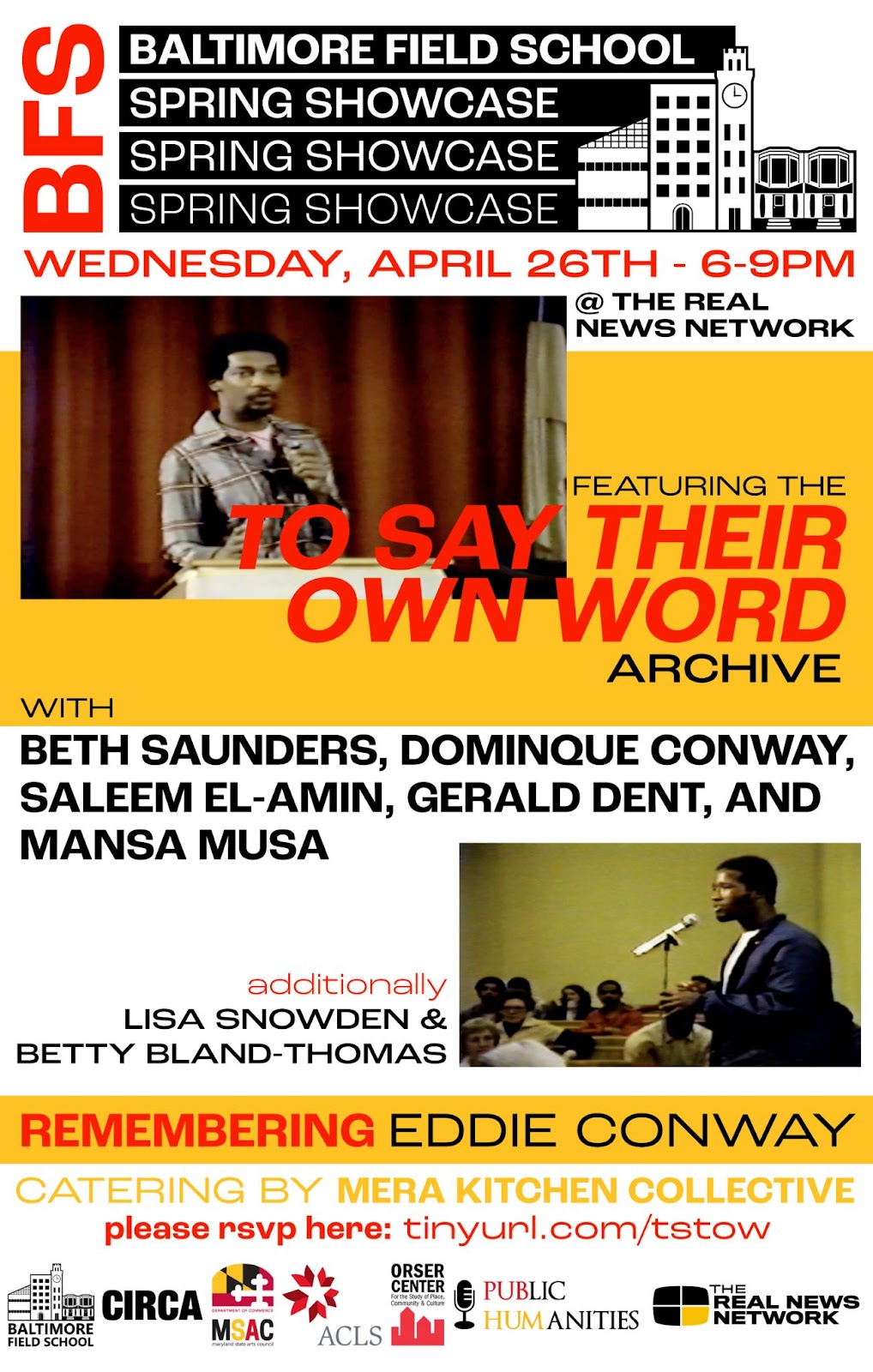
In 1980 Marshall “Eddie” Conway (April 23, 1946 – February 13, 2023) helped organize a prisoners’ educational outreach program called “To Say Their Own Word,” where thinkers and scholars came to Maryland Penitentiary and spoke about social topics like impending U.S. fascism, the prison-industrial complex, capitalism, increasing surveillance, and other pressing issues. Speakers included Amiri Baraka, Askia Muhammad, Bruce Franklin, Nijole Benokraitis, and Charlie Cobb. The “To Say Their Own Word” archival project incorporates the oral tradition of storytelling to transmit the experiences of incarcerated people by documenting their reflections over forty years later.
The Real News Network and UMBC’s Special Collections, Public Humanities, and Baltimore Field School partnered to develop public programming around this collection by conducting oral history interviews, excerpts of which will be featured at a free public event in Baltimore on April 26. In the words of Community Fellow Cameron Granadino, “this project is really about how political prisoners inspired people to organize in the community.” We hope this archive is one small part of the legacy of compassion and humanity Eddie Conway leaves behind to inform and inspire future generations.
Baltimore Field School Fellows Lisa Snowden of theBaltimore Beat and Betty Bland-Thomas from Sharp Leadenhall will also give brief updates at the spring showcase at TRNN.
We also are excited to welcome our new BFS 2.0 Program Coordinator Buffy Illum. Buffy is a Maryland native and is thrilled to support the BFS 2.0 community and help develop our week-long summer institute on July 17 – 21. Buffy is a project and grants manager as well as collaborative research practitioner who enjoys working behind the scenes to support health, environmental, and social justice initiatives. She is very much looking forward to meeting the fellows and serving the community.
Save the Date: Tuesday, May 2
On May 2we’ll have a virtual fellows meeting at 1 PM (please mark your calendar)to discuss the 2023 Summer Institute scheduleand then do an optional potluck and park meet up at Druid Hill Park‘s Lakeside Pavillion from 4-7 PM. Come enjoy a spring BFS potluck with the Baltimore Field School Community and UMBC fellows. Bring your picnic blanket and be ready to strike a pose. Please RSVP via the potluck form. Catalina Dansberger Duque, a UMBC fellow suggested a park meet up to enjoy the beautiful weather.
UPCOMING FELLOW EVENTS
BFS Community Fellow Yesenia Mejia-Herrera wants to share events she is hosting in east Baltimore in partnership with the Creative Alliance:
Jovenes en Accion at Creative Alliance (3137 Eastern Ave.) Mondays and Wednesdays until June 7 from 4:30PM- 6:30PM in the Creativity Center. Jóvenes en Acción is a Latin American folkloric dance and service- learning program serving youth ages 12 to 20. Led by dancers, choreographers, and educators from Monterrey, Mexico, participants will engage in an arts-based dance program with an emphasis on dances, steps, and routines that represent Latin American identity, culture, and heritage. Registration Link: https://forms.gle/uKrTgJKHfjNSNDUB7
Artesanitos at Creative Alliance on Saturdays from 11AM- 1PM until May 27 for ages 7-11. Artesanitos is a free educational program centered on passing down folkloric traditions in Latin American arts and crafts. Registration Link: https://forms.gle/VsZTursgc2oU7U9x6
Special Day with Mama at Creative Alliance on May 6th from12-4PM. Mother’s Day is a special holiday around the world. We take this time to honor, thank, and celebrate the important caregivers in our lives. In Latin American tradition, families gather and acknowledge their warrior mama with folkloric dances, live music, poems, gifts, and traditional food. Join the Artesanas of the Creative Alliance to celebrate all mamas in the Latin American way!
The 11th International Digital Telling Conference will feature a tour of East Baltimore with Yesenia and one of West Baltimore with Fellow Curtis Eaddy II. The conference is in Baltimore on Tuesday, June 20th. The day opens on UMBC’s campus with a morning keynote and conference sessions followed by an afternoon in Baltimore City with site visits, storytelling tours, and community project exploration. For more info or to register: https://dreshercenter.umbc.edu/dst2023/
Community Sound Stage
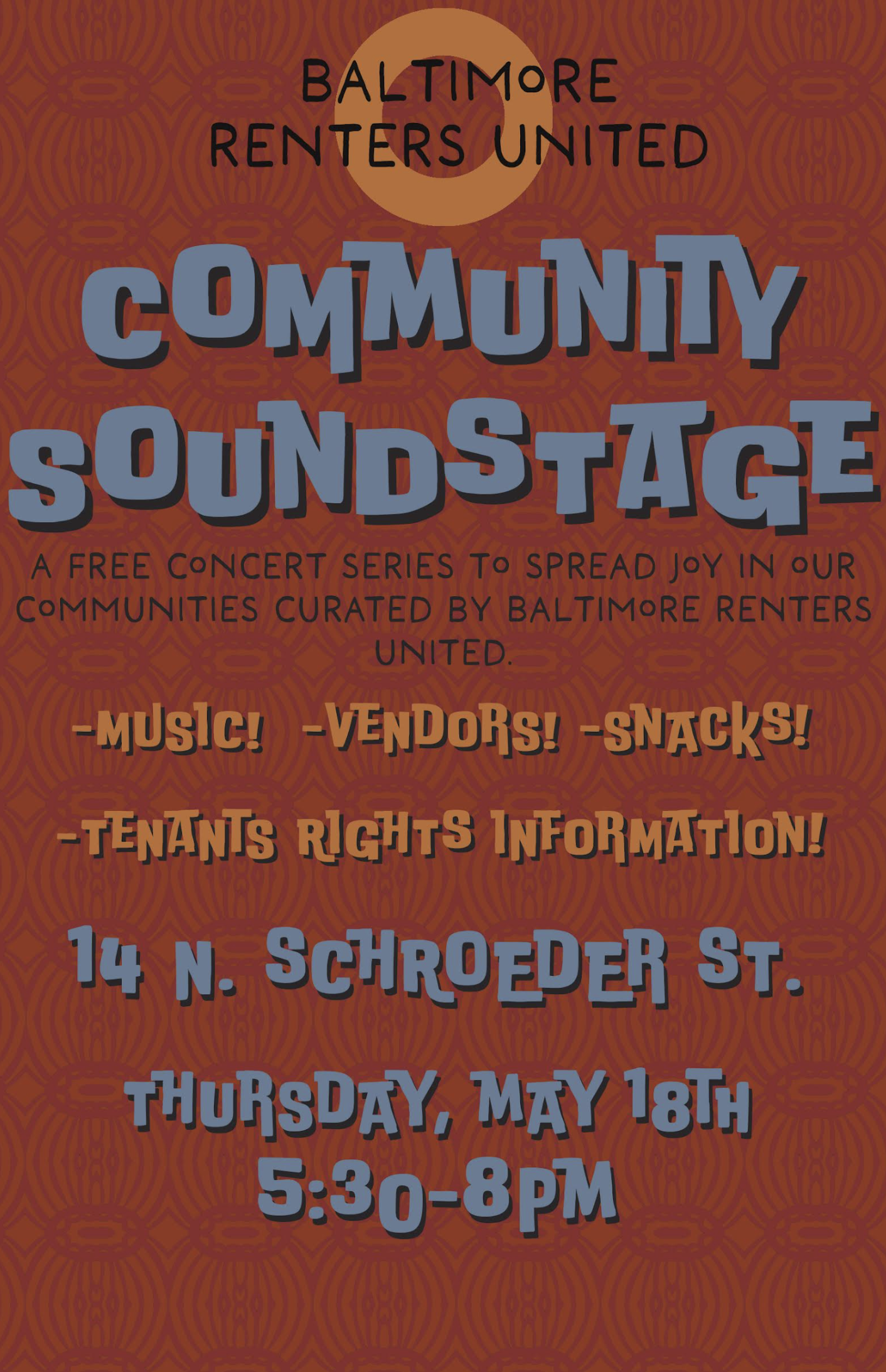
Community Fellow Tisha Guthrie is hosting a Community Soundstage with Baltimore Renters United on Thursday, May 18 in a Poppleton vacant lot at 14 N Schroeter Street that was once the Pop Farm community garden. In 2021, the garden was displaced for a development project that never happened. This event is part of the Bringing Our Community Joy (BOC Joy): Community-led Development, Starting at the Root project focused on a holistic approach to address trauma and heal with a 3 step process: (1) self-care, (2) community care, and (3) community organizing. Across the country, community-led movements are redirecting the trajectory of local policies, insisting that community priorities be reflected in budget line items. In a city like Baltimore, which has suffered and continues to be blunted by trauma after trauma, a more comprehensive approach is our best chance at building a sustainable movement. The people of Baltimore deserve emotional, physical and mental spaces to dream. The BOC Joy project strives to provide such a space.
“I am your neighbor” Project
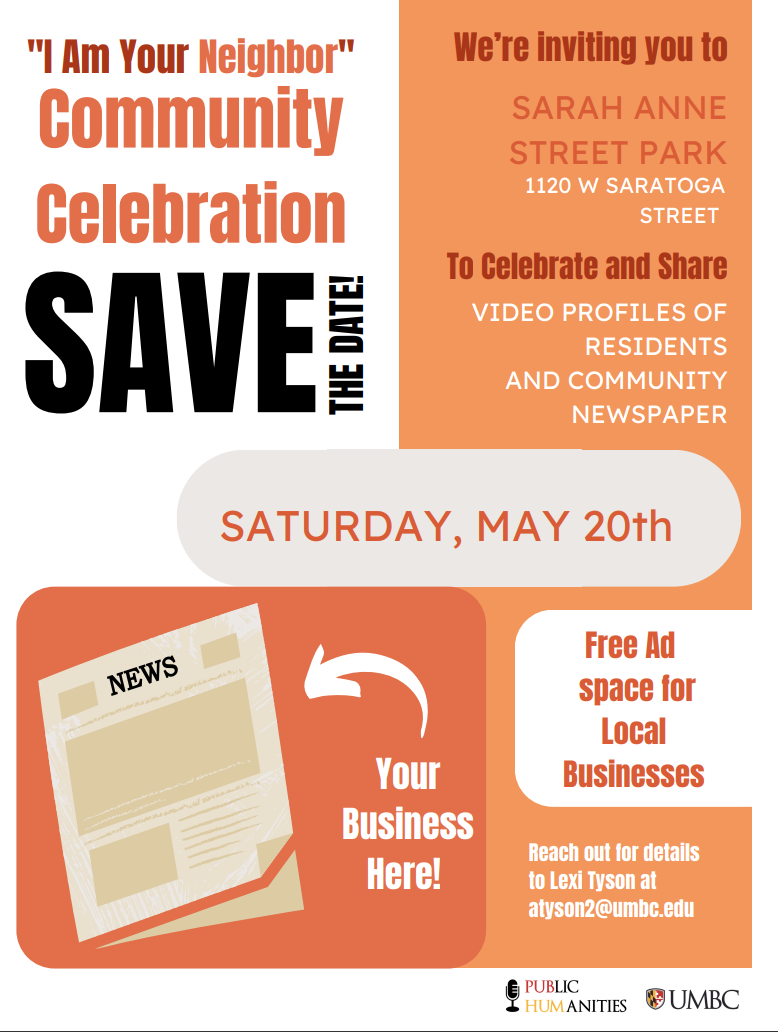
Curtis Eaddy II is working with Nicole King’s American Studies class on the “I am your neighbor” project focusing on the Poppelton neighborhood of West Baltimore. Save the date for a community event on Saturday, May 20 to celebrate the signing of the Sarah Ann Street Local Historic District by Mayor Brandon Scott last week. We will also kick off the fight to preserve homes along the 1100 block of Saratoga Street and a campaign for the community’s Poppleton Plan. Poppleton residents are fighting for preservation and community-led development in their neighborhood and Baltimore City. You or your organization can put a free ad in our community newspaper that debuts on May 20.
SHARE YOUR UPCOMING EVENTS FOR OUR SUMMER EDITION
Finally, summer is a busy time in Baltimore, so we have started a google doc for fellows and friends to add upcoming summer events HERE.
The next BFS 2.0 “Notes from the Field” will come out in June and have the breakdown for our week-long summer institute in the third week of July and feature your upcoming events.
Thanks for all you do. We will see you at the Spring Showcase on April 26.
We dedicate this edition of “Notes from the Field” to the memory of Eddie Conway (1946-2023)
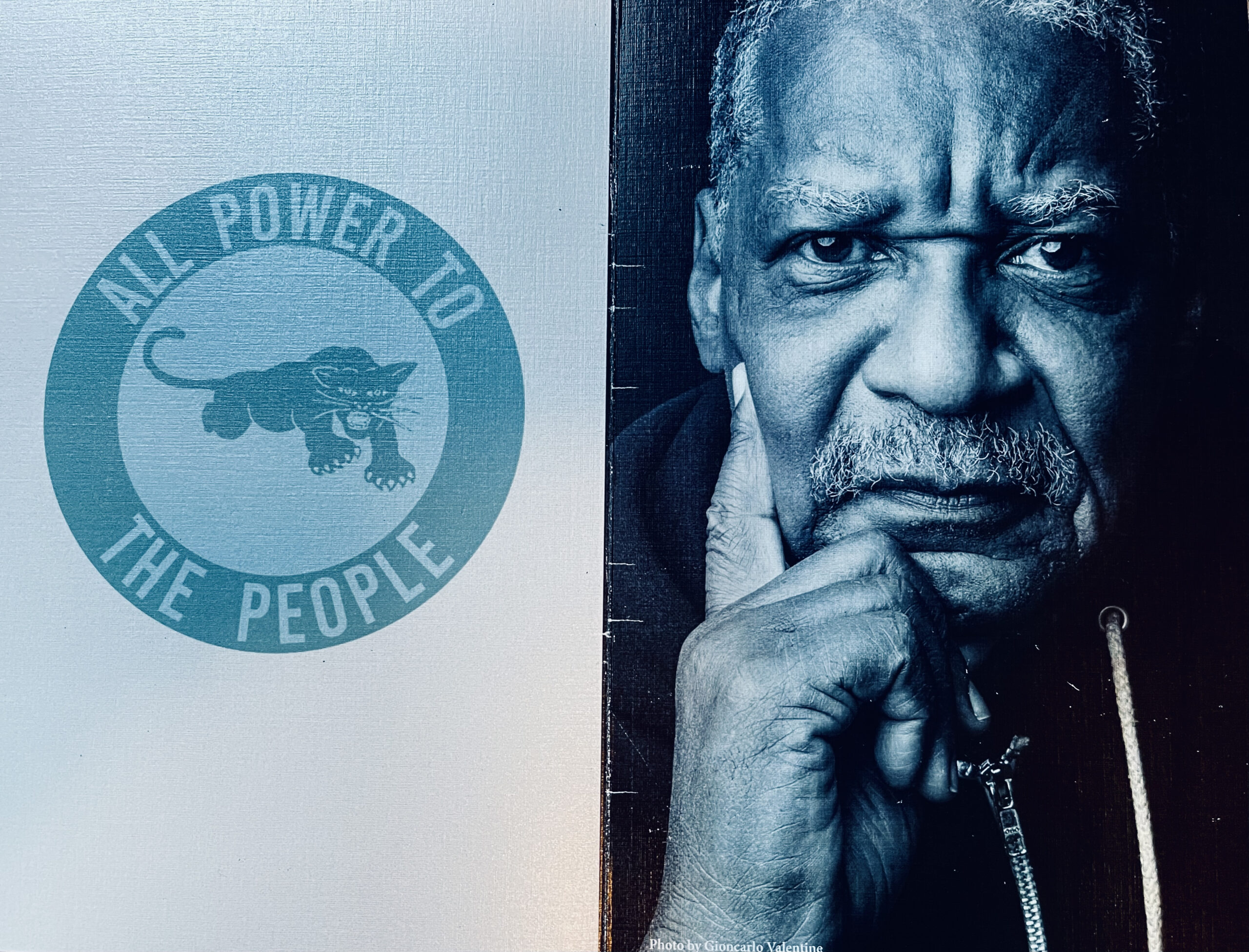
Image by the Black Panthers. Photo by Giancarlo Valentine. 2023 Celebration of Life for Eddie Conway.
We are just a week away from our first spring meeting of Community Fellows and the first BFS 2.0 social of 2023. Our BFS socials are unstructured time for fellows and friends to come together to share food, stories, and build relationships. One of the things we learned in BFS 1.0 is that relationship building is the key to trust, partnership, … and good times.
Check out the BFS website to read about the new cohort of 11 UMBC Fellowswho will work with us at the BFS 2.0 Summer Institute on July 17 – 21, 2023. Congratulations!
Please consider adding your ideas for our week of work in the field with this BFS google survey (due Friday, March 3). We want to hear from you!
Please save the date for our BFS Spring Showcase on Wednesday, April 26 from 6-9pm at The Real News Network to feature the “To Say Their Own Words” archive–a partnership with Eddie Conway, Cameron Granadino, and UMBC Special Collections.
We were saddened to hear of the passing of Eddie Conway on February 13, 2023. We send our condolences to his family–especially his partner Dominque Conway–and friends. In the words of Community Fellow Cameron Granadino, “this project is really about how political prisoners inspired people to organize in the community.” We hope this archive is one small part of the legacy of compassion and humanity Eddie Conway leaves behind to inform and inspire future generations.
Lisa Snowden of the Baltimore Beat and Betty Bland-Thomas from Sharp Leadenhall will also give brief updates at the spring showcase at TRNN.
This edition of Notes from the Field is dedicated to remembering the life and legacy of Eddie Conway. We ask you to read and sit with the profile The Real News Network posted to celebrate the life and work of their colleague and comrade Eddie Conway:
As the piece points out, Eddie organized the “To Say Their Own Word” seminar program in the 1980s as a way to cross-pollinate radical thought inside and outside the prison. Eddie and Cameron reached out to UMBC and we collaborated to archive this monumental program in our Special Collections so the public can engage with these materials for generations to come–freely and without charge. The humanities are public when they serve everyone and no one (meaning they are collective and not about individual credit).
As Eddie Conway wrote in his autobiography, published in 2011:
“Organizing is my life’s work, and even though I initially balked at becoming a prison organizer, that is where most of my work has been done. Friends and family tell me that I have influenced hundreds of young people, but I don’t know. I simply see the error of this society’s ways up close and feel compelled to do something about it; I have tried my hardest to avoid getting caught up in the cult of the personality that often develops around political prisoners. I have walked the prison yard and seen admiration in the eyes of others, but had to remind myself, as I straightened my posture, that it is about something bigger than me.”
Eddie Conway called on us all to engage in community organizing in whatever form we can and to embrace our humanity and the humanity of others.
“Do your little part. Do whatever you can to help change these conditions. Because we’re moving into a critical period of history, not just for poor and oppressed people, Black people, but for humanity itself. So you need to engage. Do whatever little bit you can, but you need to do something.”
—Eddie Conway in 2019, celebrating five years of freedom
Do you have an update, call, or announcement for the April 1 “Notes from the Field?” Please email nking@umbc.edu.
Onward always.
–The BFS Team
PS – Storytelling Opportunity with $350 stipend for BFS Community Fellow participation:
1: There is a virtual event on 3/3 and registration closes on Monday 2/27. Register here. This is not required (but encouraged) to participate in the in-person event.
2: The registration for the in-person event on 3/31 will include the $350 stipend. We will forward the registration once it opens up in early March.
There is no obligation to prepare anything. We would like community participants to introduce themselves and share ideas/experiences.
For more information, please contact Viridiana at vcolosi1@umbc.edu.
We are excited to start the spring semester at UMBC this week and look forward to a host of upcoming BFS-related events and opportunities. Thanks for continuing to work, think, and collaboratively build with us in 2023.
This Friday, Feb 3 is Inclusion and Public humanities: A Convening with UMBC’s Dresher Center for the Humanities and the National Humanities Alliance. Our own Dr. Sarah Fouts will be presenting and we hope to connect with other humanities professors and organizations in the region to think together about how to use the humanities to promote practices of inclusion, community engagement, and social justice.
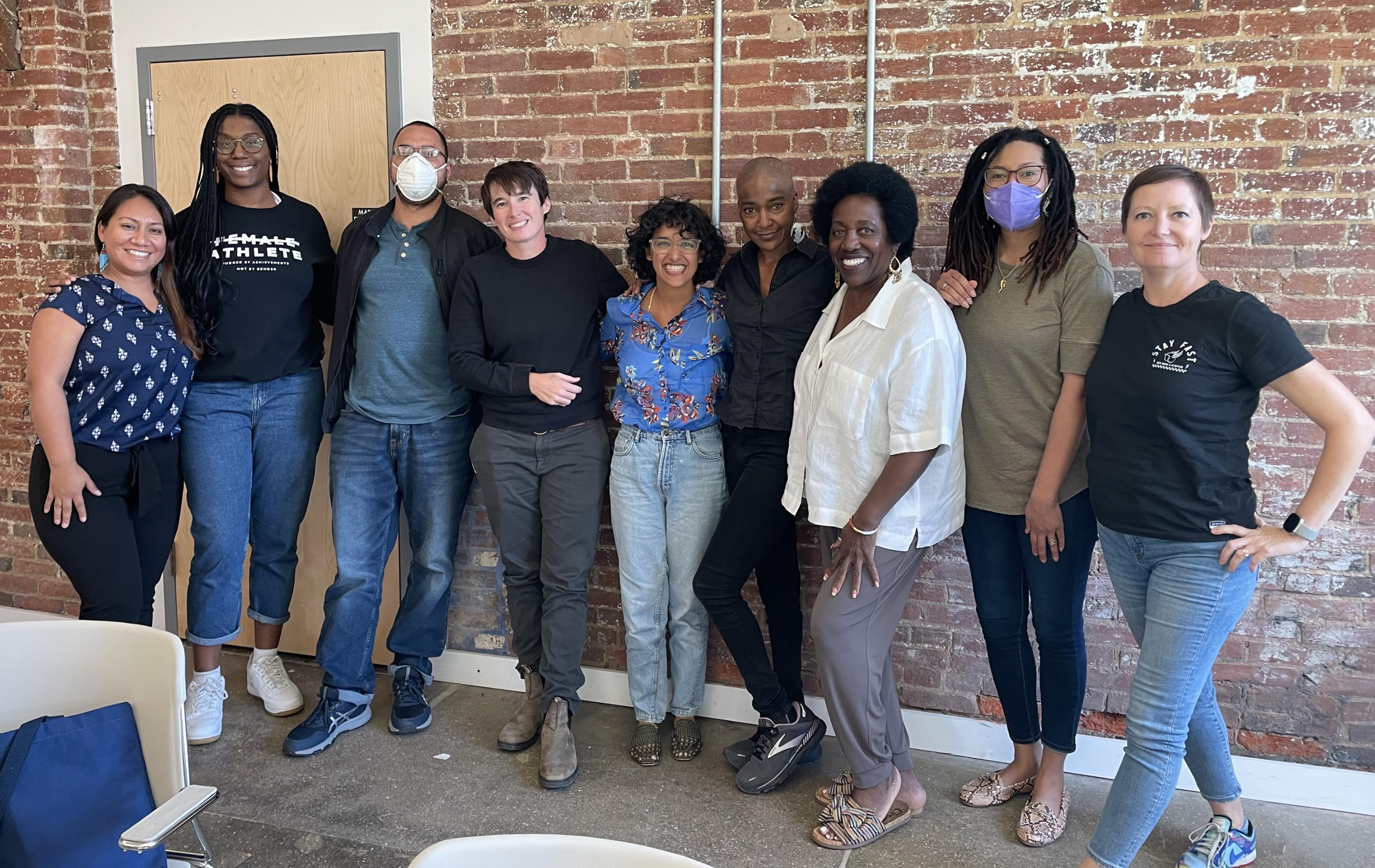
BFS team and fellows in the Lion Brothers for a fall 2022 meeting.
The BFS team looks forward to providing various opportunities for BFS Fellows to connect this spring. Here’s a few BFS “save the date” reminders:
Our next hybrid meeting will be at the Lion Brothers Building (875 Hollins St. w/ entrance on Poppleton St.) on Thursday, March 9 from 5-6pm. We begin with Community Fellows updates and discuss potential programming for our Summer 2023 BFS 2.0 on the week of July 17 – 21. Please mark your calendar and think of programming that shares your research, knowledge, skill sets, or ideas for collaboration and mutual support. We welcome YOUR ideas.
For inspiration, check out the schedule from the Summer 2021 BFS HERE. We were completely virtual in 2021 and we hope to be more “in the field” for this summer… but as we learned from our inaugural BFS, the field is really us and the relationships we build. After the March 9 spring 2023 kickoff meeting, everyone is invited to The Back Yard for food, drinks, and time to connect.
We are planning our Spring 2023 BFS Showcase at The Real News Network for the evening of Wednesday, April 26 and will feature the “Say Their Own Words” project, a collaboration between Eddie Conway & Cameron Granadino (TRNN) and Beth Saunders (UMBC). The team is building an archive to be housed at UMBC and open to the public.
While a political prisoner, Eddie Conway helped organize a prisoners’ educational outreach program called “Say Their Own Words,” where thinkers and scholars came to Maryland Penitentiary and spoke about topics like impending U.S. fascism, the prison-industrial complex, capitalism, increasing surveillance, and many other issues that have become even more pressing today. In Granadino’s words, “this project is really about how political prisoners inspired people to organize in the community.”
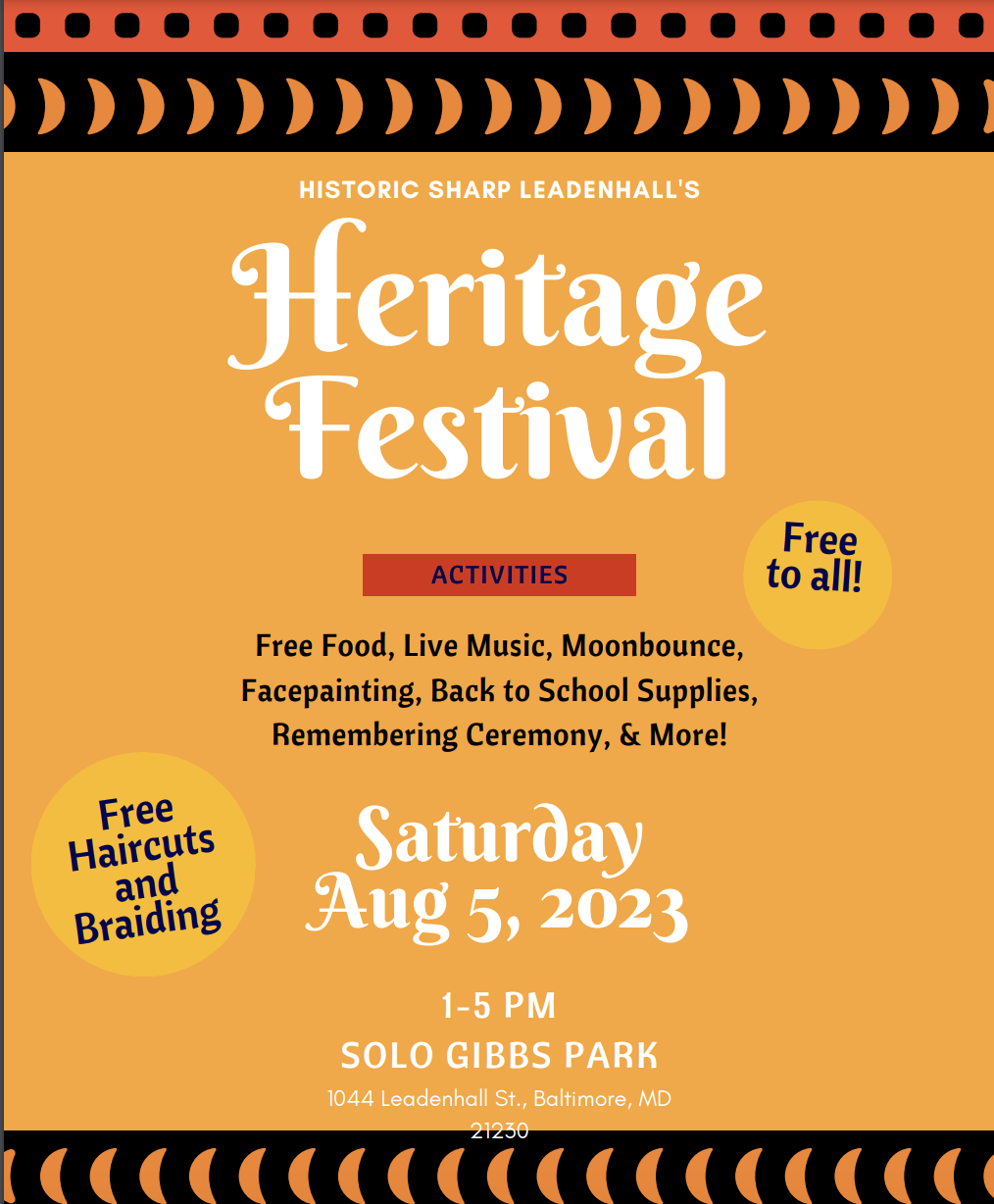
In April, we will also have short presentations by Lisa Snowden on the Baltimore Beat and Betty Bland-Thomas. Congratulations to Betty Bland-Thomas on a recent Baltimore National Heritage Area award for the Sharp Leadenhall Heritage Festival… coming summer 2023!! (more to come on that soon)
Dr. Tahira Mahdi has put together “Baltimore Field School 2.0: Undoing & Doing Anew in Public Humanities” (Evaluation Report 2023). The report presents research from her focus groups with Community Fellows and their UMBC collaborators. Once the report is finalized, we will share it with you before our March 9 meeting. One of the suggestions from the report was a monthly update at the same time every month… and here’s the first BFS 2.0 newsletter/update for 2023.
We will post updates on the Orser Center blog on the first of the month as we plan and build towards the Summer 2023 BFS 2.0. But we really want to hear from you all… please share any updates/events/calls to action with nking@umbc.edu. Jasmine and I will promote on social media and use your updates and events for our monthly BFS updates. Look out for the next one on March 1.
Finally, the applications have closed for the UMBC Community Fellows for spring/summer 2023. We hope those from our new cohort will be at the social on March 9. Even if you cannot make the 5pm meeting, we welcome you to drop by The Back Yard and break some bread with us in an informal setting.
Updates from the Baltimore Field School (BFS) 2.0 Principal Project Team:
Jasmine Braswell, Program Coordinator, UMBC It has been an interesting transition from women’s college basketball for 6 years to working in different positions. At the end of fall 2022 towards winter I continued my volunteer work with Poppleton Now Community Association and Organize Poppleton. We made historical strides in the fight against the abuse of eminent domain in Baltimore while pushing for equitable transparency with city government. My role was to help keep the story relevant while implementing ideas and questions that gave the group a different perspective on how to improve. During the holidays, my family migrated to New York for thanksgiving which felt better than any other year because basketball has kept me away from family, so I felt very blessed to be able to make that trip and spend time with them and again for Christmas. My family and I have been working to construct our new home in Fort Washington, MD. It has been a grueling process but we finally moved in (late January 2023) after not being able to be in the home for some months because of construction. The house should be completely done in March. I have also been reporting with the Baltimore Beat on a story that involves black youth and families. It involves an investigative report on the Baltimore Police Department and their actions towards Donnell Rochester. This experience with the Beat and Baltimore Field School has widened my trajectory of community engaged programs and I am so excited to continue.
Sarah Fouts, Department of American Studies; Public Humanities Director, UMBC I had a cold winter holiday with my family in Kentucky where temperatures dropped to -11 which is rare. When Southwest Airlines canceled hundreds (maybe thousands?) of flights, I got to helm a carpool of canceled BWI flyers back to Baltimore. These flyers included my nephew, Will, who was visiting his partner in Pikesville, MD and Morgan Dowty, AMST’s Program Management Specialist. We had a smooth journey and ate at Taco Bell. Since my return, we’ve been working hard to gear up for the spring and summer Baltimore Field School 2.0. Jasmine, Nicole, and I have been meeting weekly to get the ball rolling before I head to New Orleans to continue working on my Whiting Fellowship entitled, Project Neutral Grounds: At the Intersection of Street Food, People, and the Hustle. I am on course release this semester in order to work on my grant and finish my book manuscript. We are completing the production of 11 short documentary videos and will launch these on May 15, 2023. I’ll also be finding the perfect balance between completing my book manuscript this spring and New Orleans’s carnival merriment. Wish me luck.
Nicole King, Department of American Studies; Orser Center Director, UMBC At the end of 2023, I moved to a small rowhouse in the Hollins Market neighborhood of Southwest Baltimore. This means my commute to teach at the Lion Brothers building is like 2 minutes now. As someone who has chosen a car-free life, I can say moving just 1.5 miles west has shown me many privileges I had not thought deeply about… or even if I thought about them, experiencing them is different. I learn primarily through experience. Being west of MLK boulevard, I found that there are no zipcars over here, no legal weed dispensaries, and now (with the closing of the Price Rite at the end of 2022) NO GROCERY STORES. However, the move has also affirmed what I already knew from working in West Baltimore… the people are amazing. I am excited about teaching my Spring 2023 course Preserving Places, Making Spaces in Baltimore, which continues the A Place Called Poppleton project. This semester we are working on the “I am your neighbor” project–working with residents to explore what being a neighbor is and what their neighborhood means to them. Finally, the Sarah Ann Street Historic District made it through its first (and most important) City Council hearing on January 24. It was certainly a long time coming… ONWARD to more equity in what we preserve in Baltimore and towards real community-led development in Poppleton and across the city.
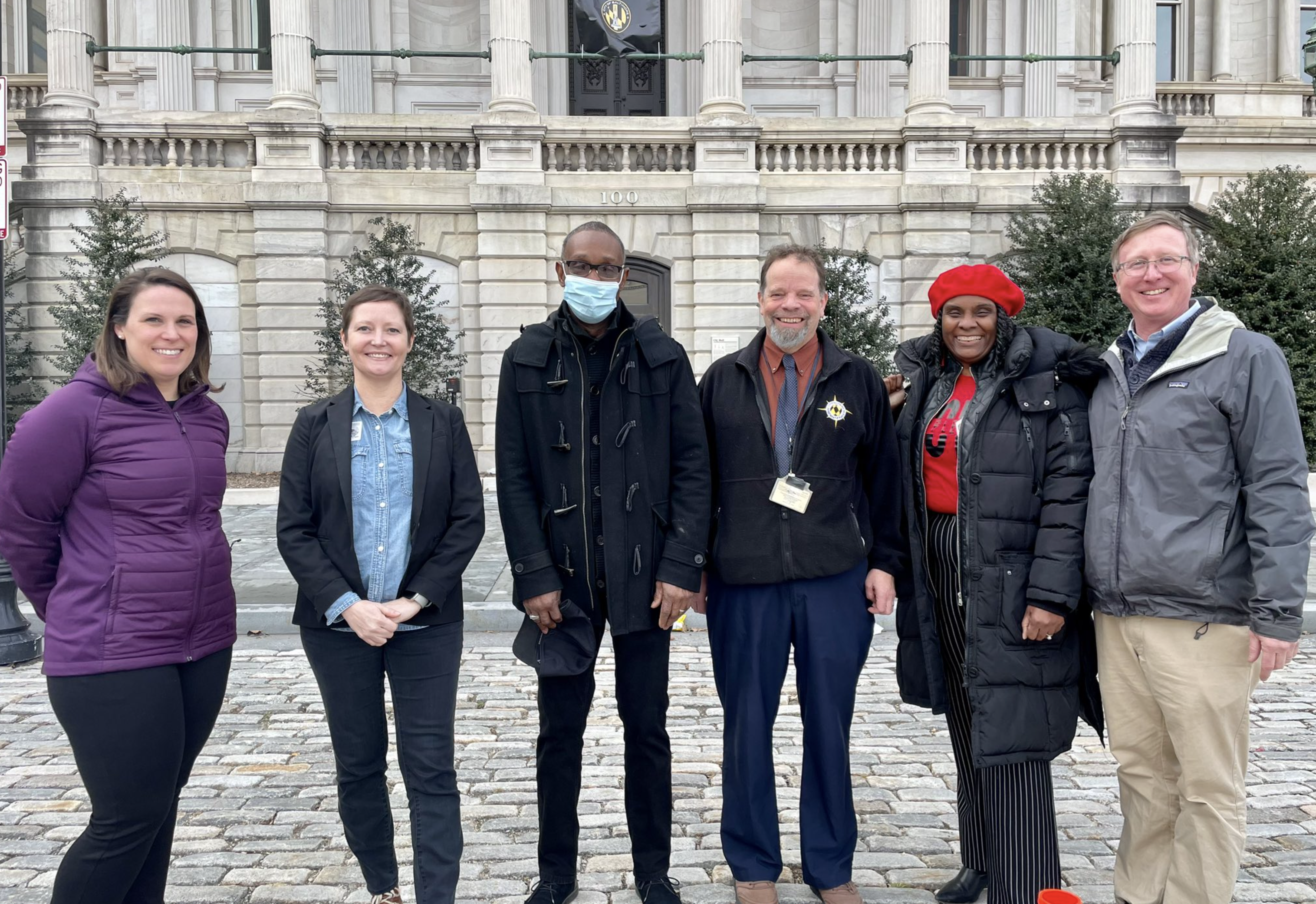
Stacy Montgomery (CHAP), Nicole King (UMBC), Curtis Eaddy Sr. (Poppleton), Eric Holcomb (CHAP), Sonia Eaddy (Poppleton), and Johns Hopkins (Baltimore Heritage) in front of City Hall after the successful hearing for the Sarah Ann Historic District. All smiling to celebrate this long-fought victory in preserving Black history and neighborhoods in West Baltimore.
Tahira Mahdi, Evaluator, Department of Psychology, UMBCWhen we talk about the importance of bringing our WHOLE SELVES to our work, I am one of those who needs to hear it and practice it every day. I am excited to share with you all that aside from teaching courses, leading workshops, and evaluating programs, I write music blogs, screenplays, and humorous fiction. My latest novel This Is Not How It Was Supposed to Go is available at Barnes & Noble, on Amazon, and by order at your favorite bookstore. “In these naughty, explosive adventures, life in the suburbs spins way out of control, and the past always catches up to kick some ass.” I am proud to say that there is nothing academic about this tale of sex, secrets, and mischief. Don’t read it. 😉See you soon!
Things Going on at UMBC… that may be of interest to BFS Fellows:
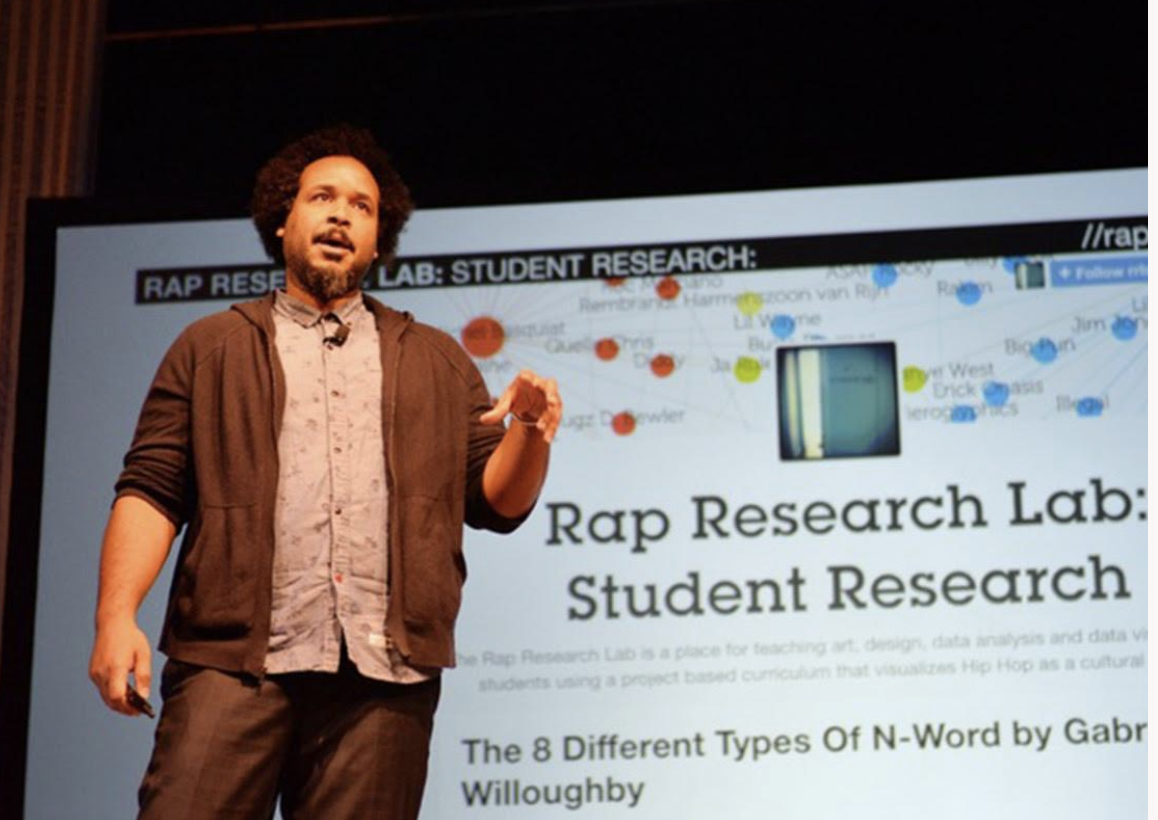
Tahir Hemphill: Rap Research Lab
January 31 – March 18
Center for Art, Design and Visual Culture
The Center for Art, Design and Visual Culture (CADVC) presents Tahir Hemphill: Rap Research Lab, opening on January 31 and continuing through March 18. The exhibition, which fosters experimentation and learning through visual and material explorations of geographies of hip hop, showcases an artist who occupies a hybrid space that intersects art, technology, social engagement, and interdisciplinary research.
Tomashi Jackson: Center for Art, Design and Visual Culture
February 9, 2023, 6pm
Tomashi Jackson, CADVC exploratory artist in residence, will discuss her research activities on the topic of arts pedagogy, and reflect on her recent Neuberger Prize exhibition SLOW JAMZ in conversation with CADVC Director Rebecca Uchill, who interviewed Jackson for the Neuberger Museum catalogue. This conversation about public presentation of research and video artwork coincides with CADVC’s own exploratory research into presenting public art, including video, in the UMBC Fine Arts building amphitheater.
Pre-read for this program: https://www.radcliffe.harvard.edu/news-and-ideas/the-evolution-of-brown-ii
UMBC’s Orser Center for the Study of Place, Community, and Cultureis pleased to announce the Spring 2023 Orser Center Fellow call for applications. Any full-time UMBC undergraduate or graduate student who has one of the following can apply:
1. an unpaid internship with a Baltimore-based non-profit or cultural institution
OR
2. a Baltimore-based research project
Orser Center Fellows receive a stipend of $1,000 for the semester February 15 – May 15.
The Orser Center fellow can (but are not required to) register for a three-credit course, AMST 498: Internship or AMST 497: Independent Research with Director, Dr. Nicole King, Associate Professor of American Studies. With approval of your advisor, graduate students may use this experience for graduate credits.
The student must also do a public presentation on the experience at the end of the spring semester.
The 2023 Orser Center Fellow should be committed to the Center’s mission of fostering innovative collaborations among scholars, students, and local community organizations. The Center seeks to put public humanities research to work as a creative response to challenges, and issues identified by communities in the greater Baltimore region.




 Through the